What this material is called
In English the product has one unambiguous name: rotary-cut veneer. That is the term to write into a contract, a proforma and a specification, and it is the term that matches the customs description under heading 4408.
On the Turkish market the same material is called something else. The word you will meet first is papel — a factory word that general dictionaries do not carry in this sense, but which tenders, specifications and procurement emails are written in. For anyone buying or selling into Turkey this is not a linguistic curiosity; it decides whether you find each other at all. The same goods are searched for as «papel», as «soyma kaplama» and as «kaplama levha», and the three searches return different suppliers.
| Term | Where you meet it | What it means |
|---|---|---|
| Rotary-cut veneer | English contracts, customs descriptions, HS 4408 | The international name of the product |
| Papel | Turkish mill floor, procurement, tenders | Industrial veneer produced by peeling |
| Soyma kaplama | Turkish technical documents and standards | The technical term for the same product |
| Kaplama levha | Turkish trade, catalogues | General word: a sheet of veneer, cut to size |
| Furnir | Rare, dated usage | A borrowing from German |
| Lushchyony shpon | Russian shipping documents and mill paperwork | The Russian name on the export set |
The practical reading: if a Turkish counterparty writes «papel», they are talking about industrial raw material. If they want a decorative figure, the product is sliced veneer — a different item with entirely different price logic.
How it is made
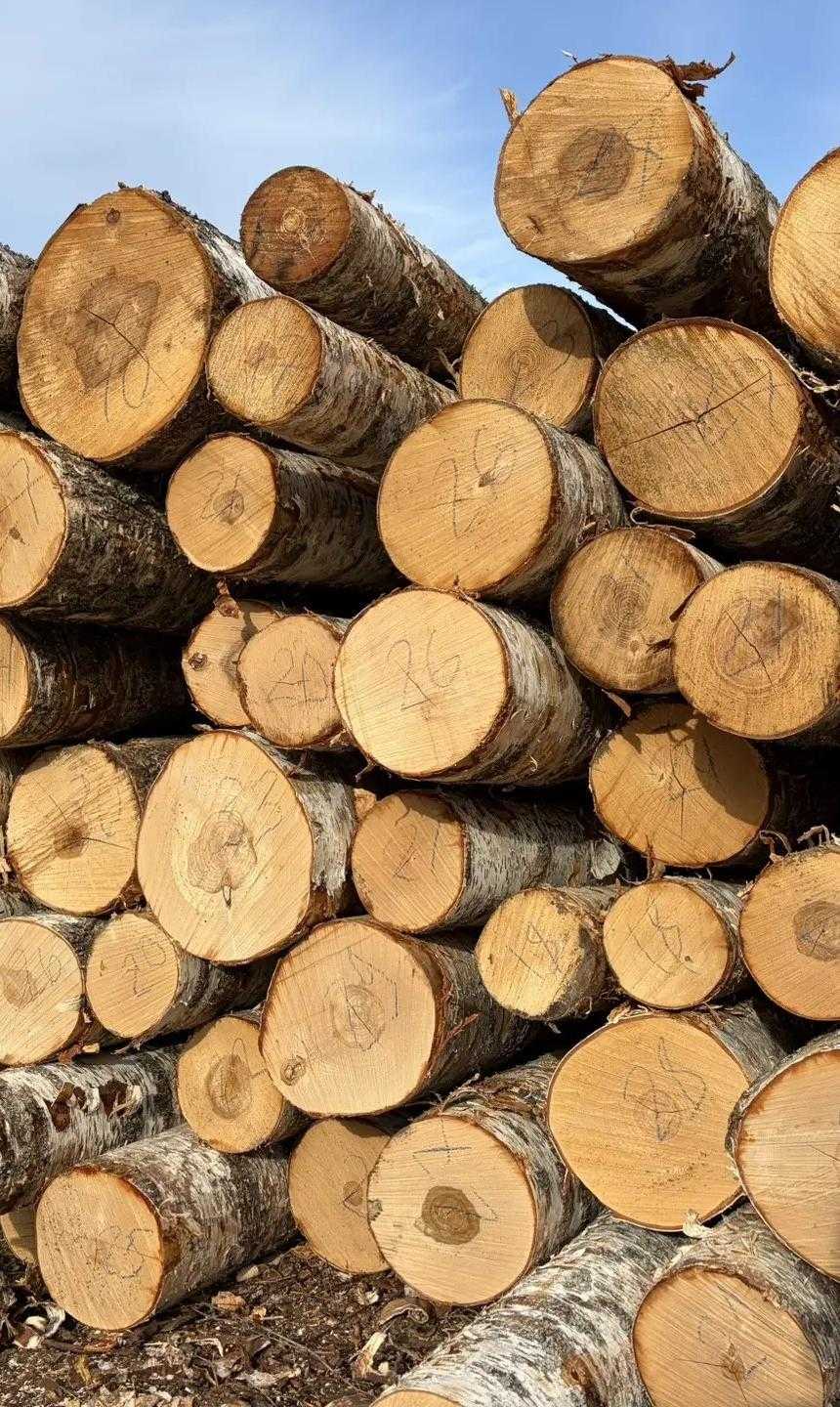
Peeling is the most economical way of using wood: the surface area taken off one log is several times what sawing the same log would yield. The process runs in six steps.
- Bucking and selection. Plywood-grade logs are separated out: straight, knot-free stems of sufficient diameter.
- Steaming. The log is held in a vat at 40–60 °C. The fibre softens so the knife cuts it instead of tearing it. In winter this step is not optional.
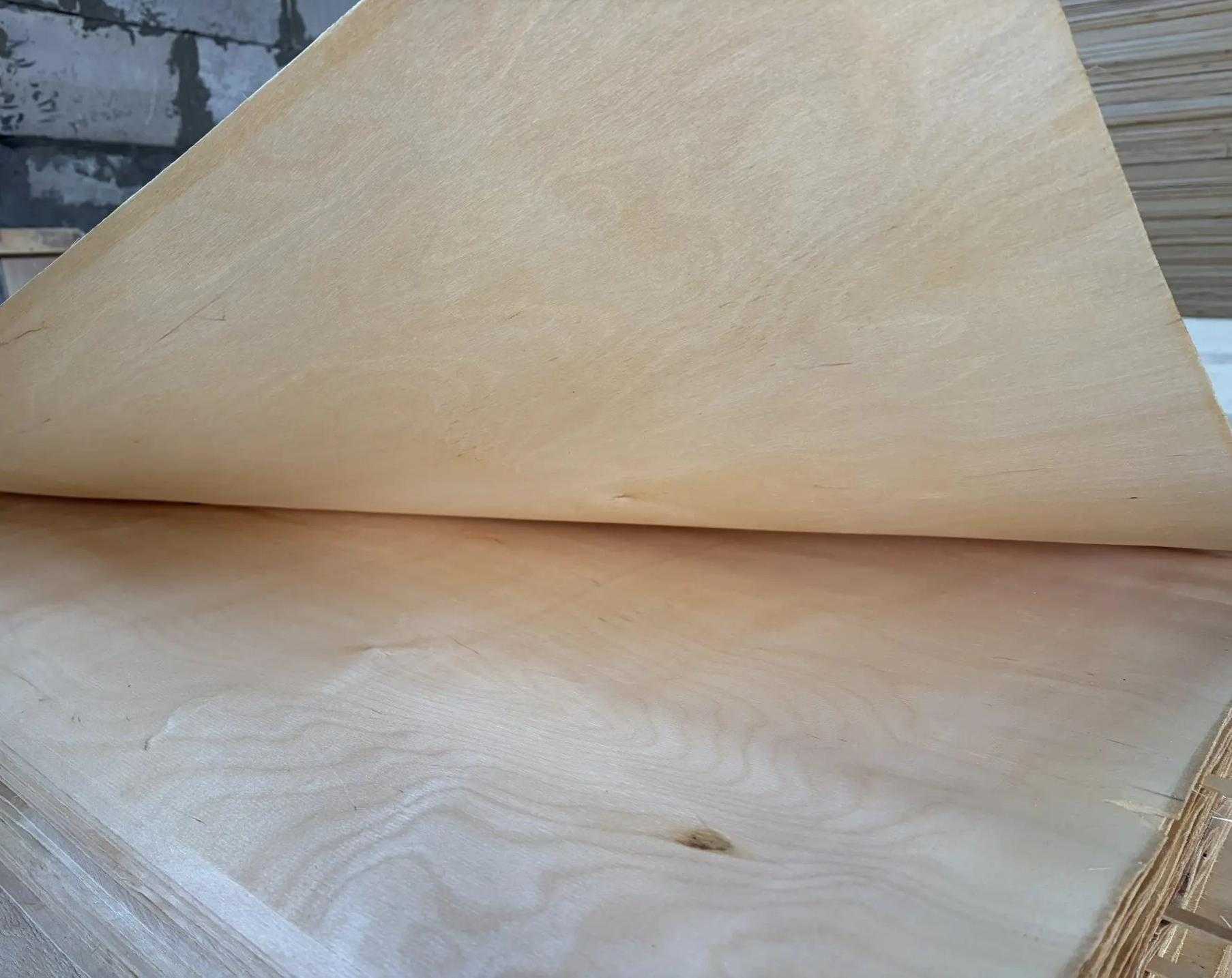
- Peeling. The log rotates on its own axis and a fixed knife lifts a continuous layer off the surface — much like a roll unwinding. The ribbon comes off unbroken.
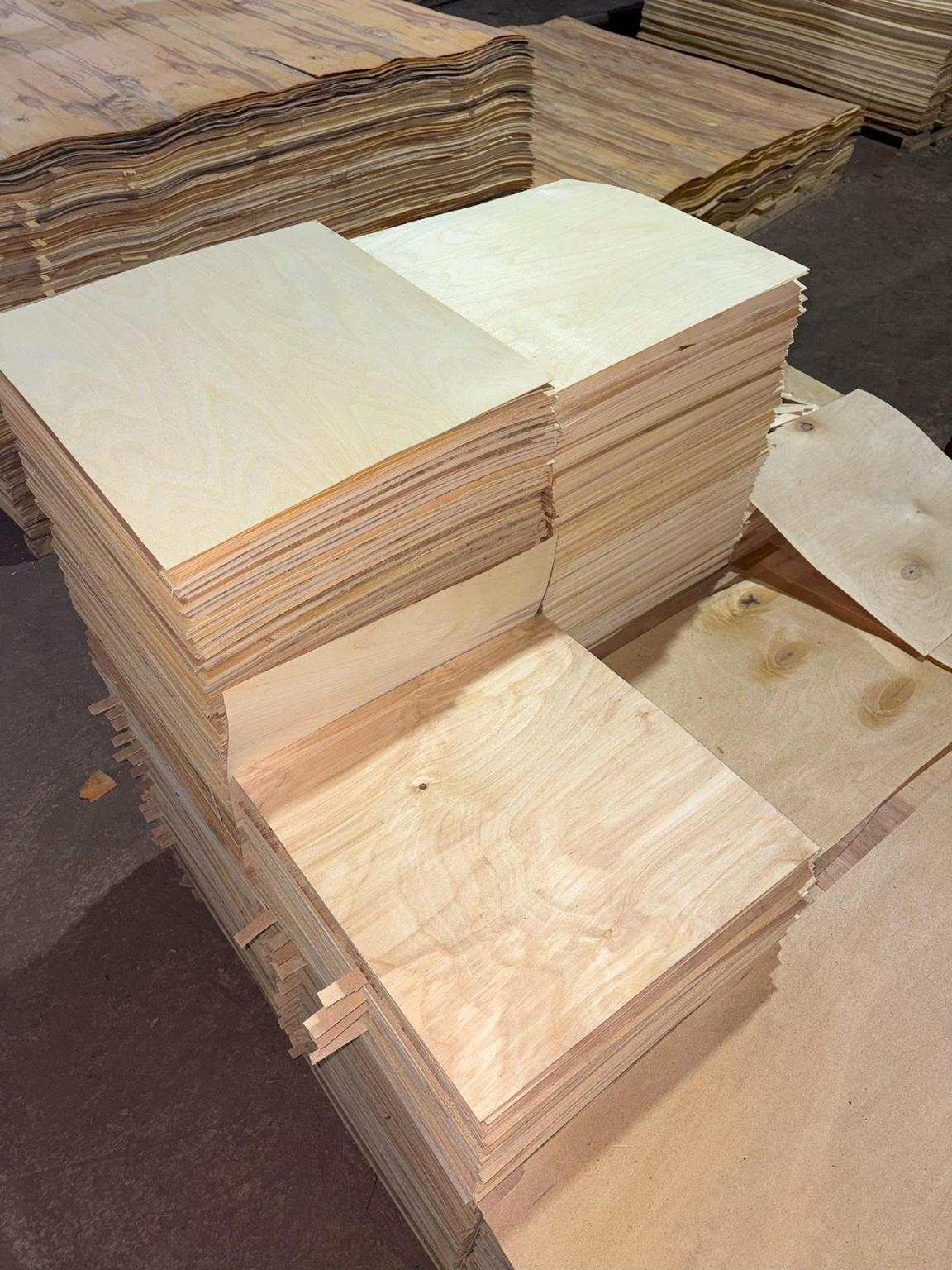
- Clipping to size. The ribbon is clipped to the ordered formats: 2600 × 1300, 1600 × 1600, 1300 × 1300 mm and so on.
- Drying. Green veneer sits at 60–80% moisture; the drying line brings it down to 5–8%. That band is the one that matters for pressing.
- Grading and packing. By knots, splits and colour variation the veneer is separated into grades 1, 2, 3 and 4, then strapped and wrapped in moisture-barrier film.
Peeling, slicing, sawing: three methods
These three get confused constantly, even though the output goes to completely different industries.
| Peeling (papel) | Slicing | Sawing | |
|---|---|---|---|
| What moves | The log rotates | The knife travels back and forth | The saw cuts |
| Thickness | 0.9–1.7 mm | 0.5–0.6 mm | 3 mm and up |
| Figure | Wide, wavy, irregular | Even, decorative | Natural section |
| Waste | Very low | Medium | High |
| Purpose | Structural raw material | Visible surface | Solid component |
| Where it goes | Plywood, LVL, packaging | Furniture fronts, doors | Joinery |
The practical conclusion: whoever asks for «papel» is looking for industrial input. If what you need is a decorative figure, the product is called sliced veneer and it is priced on a different basis altogether.
Which species it is made from
| Species | Properties | Typical use |
|---|---|---|
| Birch (Betula) | Uniform structure, pale colour, 620–680 kg/m³, bending strength 120–144 MPa | Plywood face and core, LVL, anywhere strength is required |
| Poplar | Light, soft, 400–500 kg/m³ | Cores of cheap plywood, packaging, pallets |
| Pine | Resinous, medium density | Construction plywood |
| Beech | Hard, reddish, heavy | Furniture components — not to be confused with birch, it is a different species |
Where it is used
- Plywood. The main application. An odd number of plies is glued cross-grain and pressed; the cross lay-up gives the panel strength in both directions. In detail on the plywood production page.
- LVL beams. Every ply is laid in the same direction; the result is a high-strength structural member that replaces solid timber.
- Packaging and crates. Fruit crates, light packaging, separator layers.
- Matches and sticks. Thin gauges, cut into small pieces.
- Furniture cores. Hidden inner plies and back panels.
How grade is determined
Veneer is separated into grades 1, 2, 3 and 4. The criterion is appearance: the number and size of knots, splits, colour variation, holes. This is not the same thing as the face grade of the finished pressed panel (B/BB, BB/CP, CP/CP, C/C) — how the two systems relate is set out on the grades page.
In industrial buying the most traded item is a mixed grade 1–4 lot: the plant puts the higher grade on the face and the lower grade in the core, and optimises its cost that way. Which is why the share of grade 1–2 in the lot is a more important negotiating point than the price per cubic metre on its own.
Buying rotary-cut veneer on the Turkish market
Turkey imports a large share of the raw material for its own plywood production. For birch veneer the main source is Russia; for poplar, domestic supply and Chinese material are both common.
The minimum set of items to check in an import deal:
| Item | What to look at |
|---|---|
| GTİP (Turkish customs tariff code) / HS | 4408.90 — rotary-cut veneer, other species |
| Moisture | 5–8%, and the figure must appear on the shipping documents |
| Grade distribution | The share of grade 1–2 in a mixed lot |
| Thickness tolerance | ±0.1 mm |
| Packing | Strapping, bearers, moisture-barrier film |
| Delivery terms | EXW / FOB / CIF — who carries the freight |
The clearance procedure and the tax calculation are set out on the customs page; how to assess a supplier is on the supplier selection page.