HUŞ KAPLAMARotary-cut birch veneer from Russia

Russian or Finnish birch veneer: what actually differs

It is the same tree. Finnish and Russian birch are Betula pendula and Betula pubescens from one continuous northern forest belt, and the physical properties — density 620–680 kg/m³, bending strength 120–144 MPa — do not change at the border. What differs is everything around the wood: certification, documentation, price, and above all which markets the material can legally enter. Since 2022 Russian-origin timber cannot be imported into the EU, the UK or Japan, and FSC and PEFC no longer certify it. If you sell into those markets the question is settled before quality enters into it. If you sell in Turkey or outside them, the comparison becomes a normal commercial one.

1
Species
Betula pendula and pubescens
620–680kg/m³
Density, both origins
the species does not change
2022
Since when the routes split
sanctions and certification
17,500₽/m³
Our price, mixed 1–4
≈ 219 USD/m³ EXW
species
Betula pendula, B. pubescens
density
620–680 kg/m³
bending strength
120–144 MPa
moisture
5–8%
FSC / PEFC on RU
not available since 2022
EU, UK, Japan
closed to RU origin
Turkey
open, no anti-dumping on 4408
HS code
4408.90

The wood is the same wood

Birch does not recognise the border. The species used industrially on both sides is Betula pendula and Betula pubescens, growing in one continuous belt of northern forest that runs across Fennoscandia, the Baltic states and Russia. Density, bending strength, colour, the way the log behaves on the lathe — none of it changes at a customs post.

Russian birchFinnish birch
SpeciesBetula pendula, pubescensthe same
Density620–680 kg/m³the same range
Bending strength120–144 MPathe same range
Behaviour when peeledstraight log, short even fibrethe same

Where variation genuinely exists, it exists between mills, not between countries: the lathe, the drying line and the grading discipline decide far more than the flag on the invoice. That is true within Russia and within Finland equally.
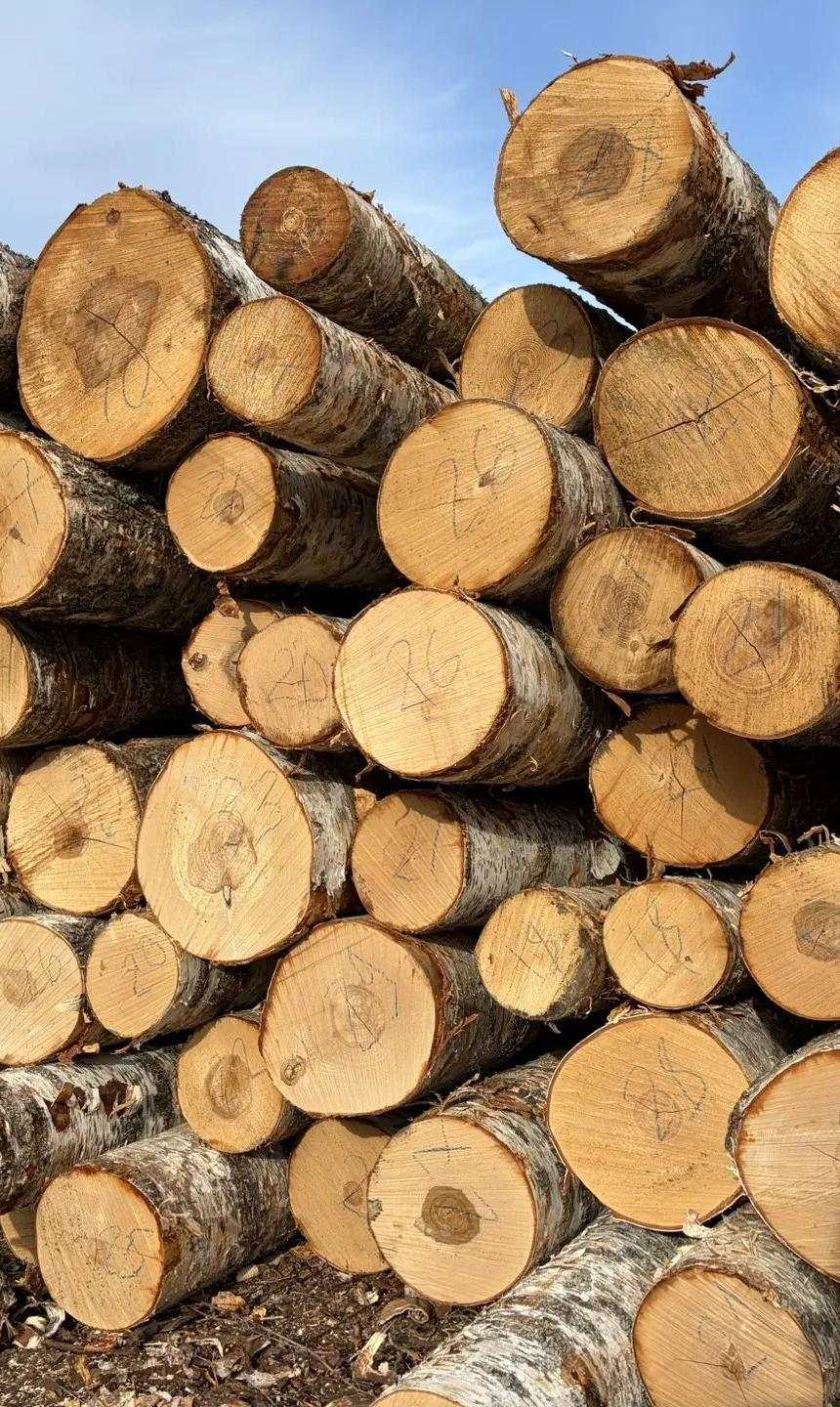
Birch logs before peeling, Udmurtia

What actually differs: everything around the wood

Certification

FSC stopped accepting Russian-origin timber on 8 April 2022, and PEFC took the same decision. A Finnish supplier can hand you a chain-of-custody certificate; a Russian one cannot, and anyone claiming otherwise is offering you a problem rather than a document. What we provide instead is a complete and accurate set on the origin of the raw material — the reasoning is on the compliance page.

Market access

This is the decisive line, and it is worth stating without hedging.

Your marketRussian originFinnish origin
Turkey, domesticopenopen
Iraq, MENA, CISopenopen
EU, UK, Japanclosedopen
Buyer requires FSCnot possiblepossible

Processing in Turkey does not reopen the closed row. Birch plywood shipped from Turkey carries a 15.8% anti-dumping duty regardless of declared origin, and from 30 December 2026 EUDR asks for the geolocation of the harvested forest — a requirement that survives any amount of processing. The detail is on the EUDR page.

Price

Russian material is cheaper, and that gap is the reason this comparison gets made at all. The cause is not lower grade but a smaller market: volume that used to go to northern Europe now competes for what remains, and the freight leg to Turkey is shorter than the one to the EU ever was. Our price is 17,500 ₽/m³ ex-works for mixed grade 1–4, roughly 219 USD/m³; the full table is on the prices page.

The Finnish side is not what it was in 2021

One point often missed in this comparison: Finnish mills historically sourced a significant share of their birch from Russia, and those imports ended in 2022. Finnish supply had to be rebuilt around domestic and other sources.

The practical consequence for a buyer is simple — compare today’s quotes, not pre-2022 assumptions. Availability, lead times and prices on the Finnish side moved as well, and a comparison built on how the market looked five years ago will mislead you in either direction.

How to compare two offers fairly

A price per cubic metre on its own is not comparable across origins. Put four numbers beside it:

  1. Thickness tolerance. Ours is ±0.1 mm. Wider tolerance means material lost at calibration.
  2. Moisture band. Ours is 5–8%, measured before dispatch and written on the shipping document.
  3. Share of grade 1–2 in the lot. 22–27% in a mixed 1–4 lot. This decides how much of what you buy can go on a visible face.
  4. Freight per m³ to your port. 90–120 USD from us to Ambarlı. From Finland the leg is different and belongs in the same line.

Those four turn two prices into two comparable costs. What the grade letters mean is on grades; how the moisture figure is produced is on moisture content.

The short answer

If you sell into the EU, the UK or Japan, or your buyer requires FSC — buy Finnish. That is not a concession, it is the only correct answer, and we would rather say it than lose your time.

If you sell in Turkey, Iraq, the Middle East, North Africa or the CIS, both origins are open to you, the wood is the same species with the same properties, and the decision comes down to the four numbers above and the price beside them.

FAQ

Frequently asked questions

Is Finnish birch veneer better quality than Russian?

It is the same species from the same forest belt, and the physical properties do not change at the border: density 620–680 kg/m³, bending strength 120–144 MPa. Quality within either origin depends on the individual mill — its lathe, its drying and its grading discipline — far more than on the country. What genuinely differs is certification and market access, not the wood.

Why is Russian birch veneer cheaper?

Mostly because its market shrank. The EU, the UK and Japan closed to Russian origin in 2022, so material that used to go there now competes for the remaining markets, and the logistics leg to Turkey is shorter than it was to northern Europe. The price gap is a consequence of restricted demand, not of lower grade.

Can I sell plywood made from Russian veneer into the EU?

In practice no. Birch plywood shipped from Turkey is subject to a 15.8% anti-dumping duty regardless of declared origin under EU Regulation 2024/1287, and from 30 December 2026 EUDR requires the geolocation of the harvested forest, which processing does not change. If the EU is your market, Finnish material is the answer and we say so plainly.

Can I get FSC on Russian birch?

No. FSC stopped accepting Russian-origin timber on 8 April 2022 and PEFC took the same decision. Any supplier offering you an FSC certificate on Russian material is offering you a problem. What we provide instead is a complete and accurate document set on the origin of the raw material.

Did Finland not import Russian birch itself?

Finnish mills did historically source a significant share of their birch from Russia, and those imports ended in 2022. That is why the question matters commercially: Finnish supply had to be rebuilt from domestic and other sources, which affects availability and price on that side too. Any current comparison should be made on today's quotes, not on pre-2022 assumptions.

What documents do you supply?

A certificate of origin issued by the Russian Chamber of Commerce and Industry, a phytosanitary certificate, and the standard shipping set. EUR.1 and A.TR do not apply, because there is no free trade agreement between the EAEU and Turkey. We do not alter origin on documents; the reasoning is on the compliance page.

How do I compare two offers fairly?

Put four numbers next to each price: thickness tolerance, moisture band, the share of grade 1–2 in the lot, and freight per m³ to your port. A price per cubic metre without those four is not comparable between origins, because each of them changes how much usable material you actually receive.

Tell us the format, thickness and monthly volume

We will work out the cubic metres per container, the freight to your port and the lead time. We answer during Turkish business hours, in Turkish, English and Russian.

Author: Andrey, Türkiye representative, HUŞ KAPLAMA · Published: · Updated: