Prices valid as of August 30, 2026. Prices exclude VAT, ex-works.
The list is kept in ₽; USD is converted at the 19 Aug 2026 rate (80 ₽/$). Contracts are in USD or EUR. · HS 4408.90 · MOQ 33 m³
The formats, one by one
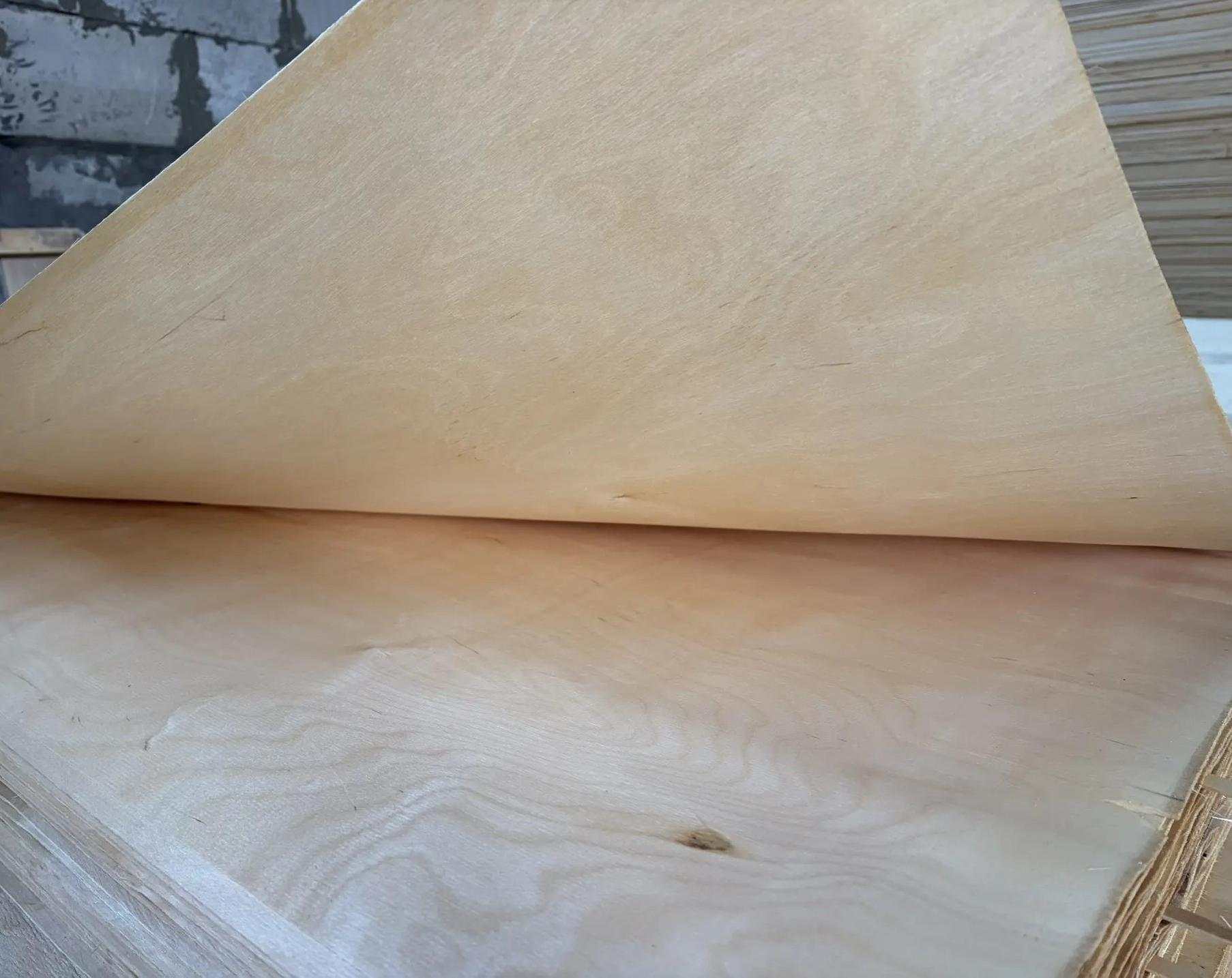
2600 × 1300 mm — the serial-production standard
A large sheet with the maximum usable area, and the natural choice for a plywood plant running wide formats in the press. Its only drawback is in transport: the bundle does not fit the container’s width, so a container takes 33 m³.
1600 × 1600 mm — the most efficient container format
A square sheet. Floor utilisation rises to 63.3% and a container takes 38 m³ — about 15% more than 2600 × 1300. Where fast cutting and batch consistency matter, this format pays off twice: in the shop and in the freight bill.
1300 × 1300 mm — compact
When you do not need a large sheet, this one breaks down into parts faster and takes less warehouse space. A container holds 40 m³.
420 × 420 mm — pre-cut blanks
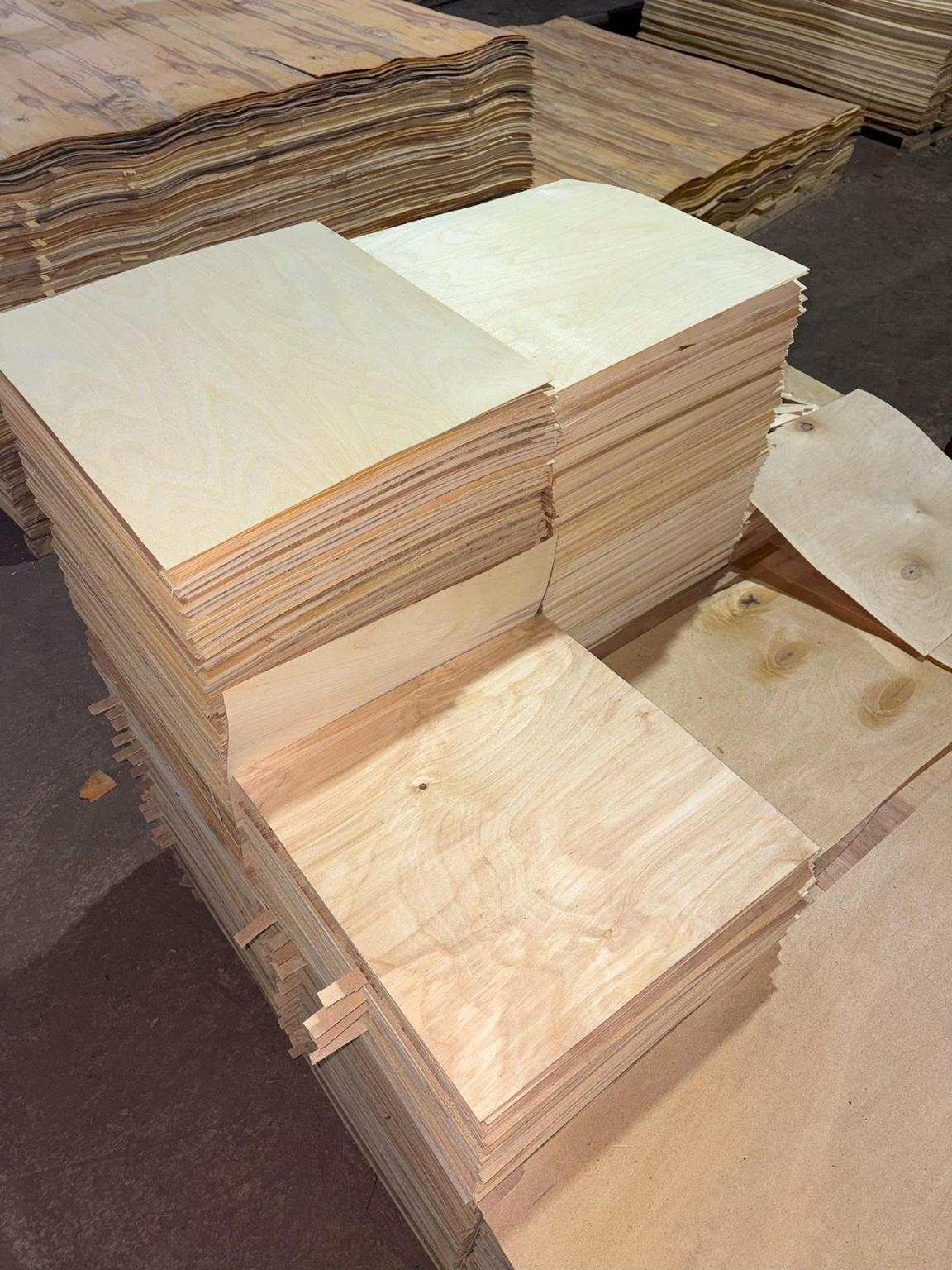
You buy parts rather than cubic metres. The cutting waste and the process step leave your shop. Grade 1–2 content here is 50%, so the material is noticeably cleaner. Intended for small-part shops, bent-laminated products and packaging.
| Transport unit | Format | Net m³ | Gross t | Floor use | Note |
|---|---|---|---|---|---|
| Boxcar | 2600 × 1300 | 102 | — | — | Loaded directly from our own rail siding on site. |
| 40'HC container | 1600 × 1600 | 38 | 23.6–25.8 | 63.3% | Limited by weight, not volume. The most efficient container format. |
| 40'HC container | 1300 × 1300 | 40 | 24.8–27.2 | 66.4% | Fast breakdown into parts, less warehouse space. |
| 40'HC container | 2600 × 1300 | 33 | 20.5–22.4 | 47.8% | A 2600 mm bundle does not fit the 2352 mm inner width — lengthwise only. |
| Euro truck (13.6 m) | 2600 × 1300 / 1600 × 1600 | 34 | 20.0–22.0 | — | Always weight-limited: 82–92 m³ of space but only 20–22 t of payload. |
| 20'DV container | 2600 × 1300 | 15 | 9.3–10.2 | 49.0% | Only 35% of payload used. Not recommended for veneer — you pay for air. |
What it is used for
What we make is primarily raw material for the plywood press: birch plywood, combi plywood (birch face over poplar core) and film-faced formwork panels. Beyond that it goes into door skins, furniture surfaces, bent-laminated components and packaging.
We do not make decorative sliced veneer — that is a different product and a different market.