Who this format is for
2600 × 1300 mm is the long sheet that lies straight onto the platen of a standard plywood press. Most plywood plants in Turkey ask for exactly this size, and there are three reasons why:
- Trim waste is at its lowest. When the panel comes out of the press and is cut to size, the edge waste here is lower than with the other formats.
- Fewer joints in LVL. A long format means fewer overlaps along the length of the beam.
- Supply-chain habit. Russian and Belarusian veneer has arrived in this size for decades, and your press settings were made for it.
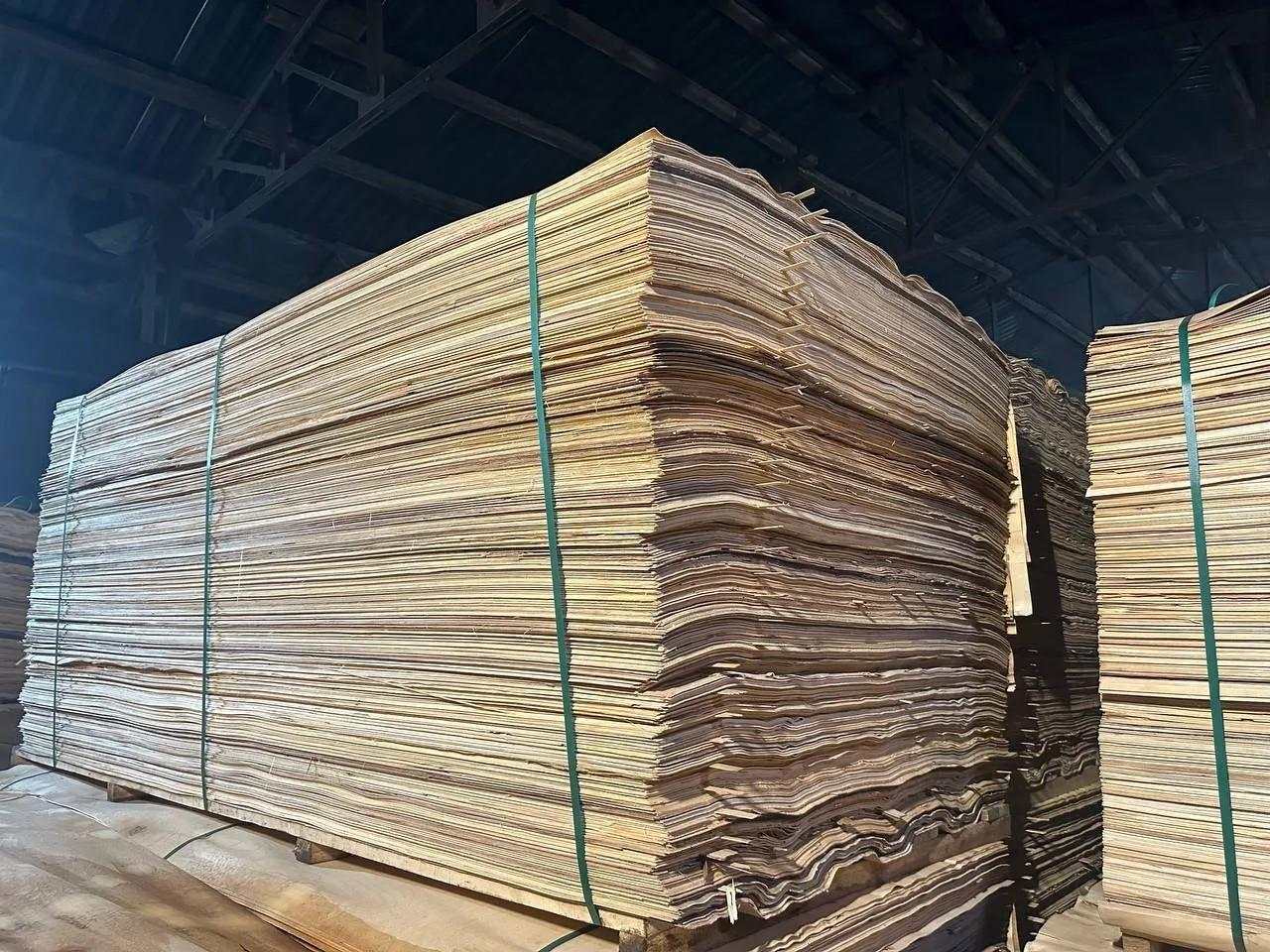
Technical specification
| Parameter | Value |
|---|---|
| Size | 2600 × 1300 mm (±5 mm) |
| Thickness | nominal 1.5 mm; band 0.9–1.7 mm (±0.1 mm) |
| Species | Birch (Betula) |
| Production method | Rotary cutting (peeling) |
| Moisture content | 5–8% |
| Grade | Mixed 1–4 |
| Grade 1–2 share | 22–27% |
| Density | 620–680 kg/m³ |
| Bending strength | 120–144 MPa |
| GTİP (Turkish customs tariff code) / HS | 4408.90 |
| One sheet | 0.00507 m³ · 3.38 m² |
| 1 m³ | 197 sheets · 667 m² |
| Packing | Strapped bundle, bearer blocks, moisture-barrier film |
Sheet count and surface by thickness
The same cubic metre means a different number of sheets and a different surface area at each thickness. If you plan production in square metres, the table below is the one you will use.
| Thickness | 1 sheet, m³ | Sheets per m³ | Surface per m³ | Sheets in a 33 m³ container |
|---|---|---|---|---|
| 0.9 mm | 0.00304 | 329 | 1,111 m² | 10,848 |
| 1.2 mm | 0.00406 | 247 | 833 m² | 8,136 |
| 1.5 mm | 0.00507 | 197 | 667 m² | 6,509 |
| 1.7 mm | 0.00575 | 174 | 588 m² | 5,743 |
Container and railcar figures
| Transport unit | Net m³ | Sheets (1.5 mm) | Surface | Gross weight |
|---|---|---|---|---|
| 40’HC container | 33 | 6,509 | ~22,000 m² | ~21.5 t |
| Covered railcar | 102 | 20,118 | ~68,000 m² | ~66 t |
Price and total cost per container
| Item | Value |
|---|---|
| Goods, ex-works | 17,500 ₽/m³ ≈ 219 USD/m³ |
| Goods for 33 m³ | ≈ 7,220 USD |
| Freight (Novorossiysk → Ambarlı) | 90–120 USD/m³ → 2,970–3,960 USD |
| Estimated CIF total | ≈ 10,200–11,200 USD |
| CIF per m³ | ≈ 309–339 USD |
| Transit time | 22–32 days |
On top of that, on the Turkish side, come the customs duty for GTİP 4408.90 (most likely 0%), 20% KDV (Turkish VAT), and, if you work on deferred payment, the 6% KKDF (Resource Utilisation Support Fund) levy. The full calculation is on the customs page.
Grade: what actually arrives in the lot
The standard lot is mixed grade 1–4. The grade 1–2 share inside it is 22–27%, which is above the typical mix on the market. In practice that means this: in an 11-ply panel only two layers are visible surface, so top grade is needed for roughly 18% of the volume. The mix covers that need on its own, and you do not end up buying face veneer separately.
If you need top grade only: grade 1–2 is 35,000 ₽/m³ and grade 1 is 50,000 ₽/m³. What the letters mean, and how they relate to the face grade of a finished panel, is on the grades page.
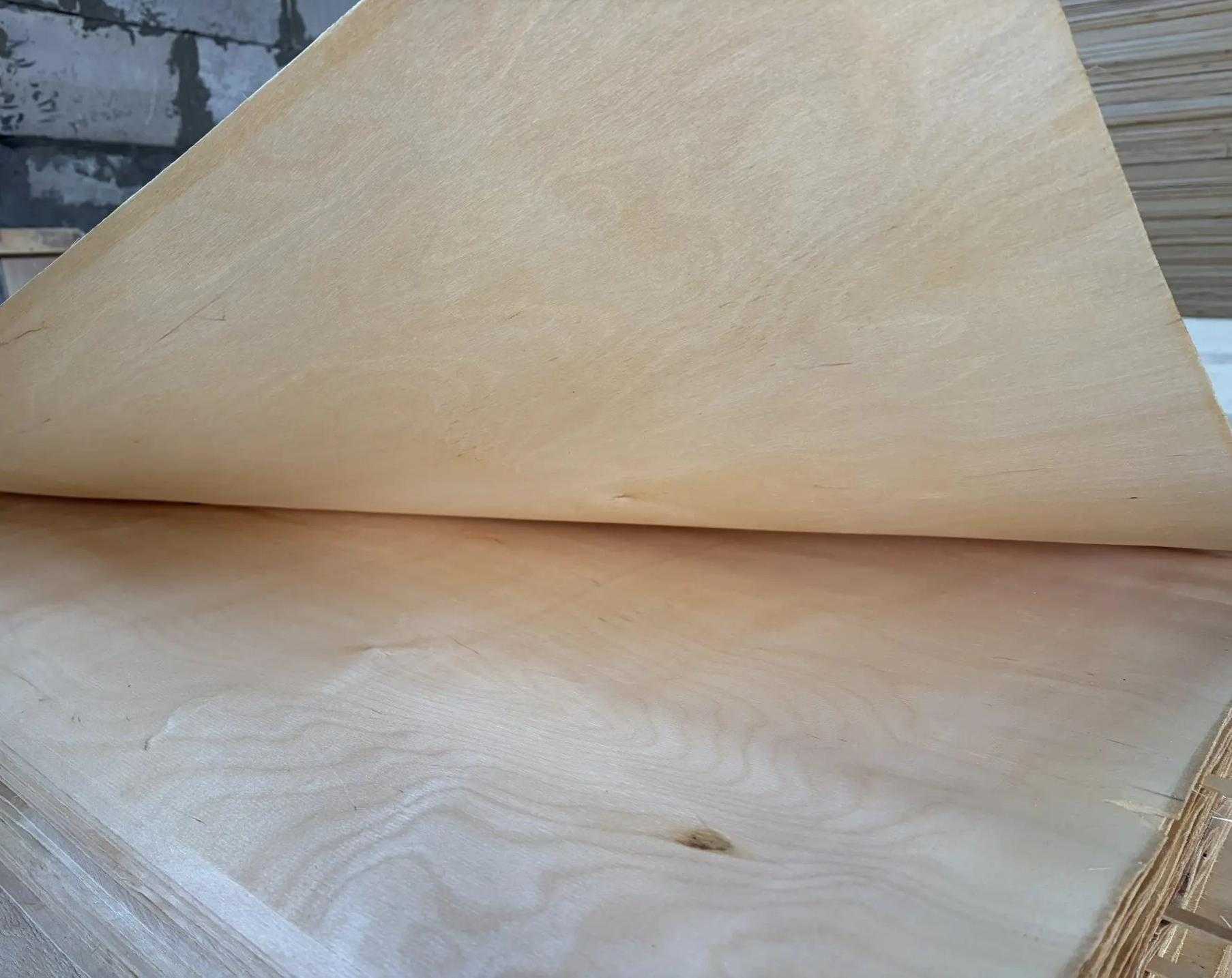
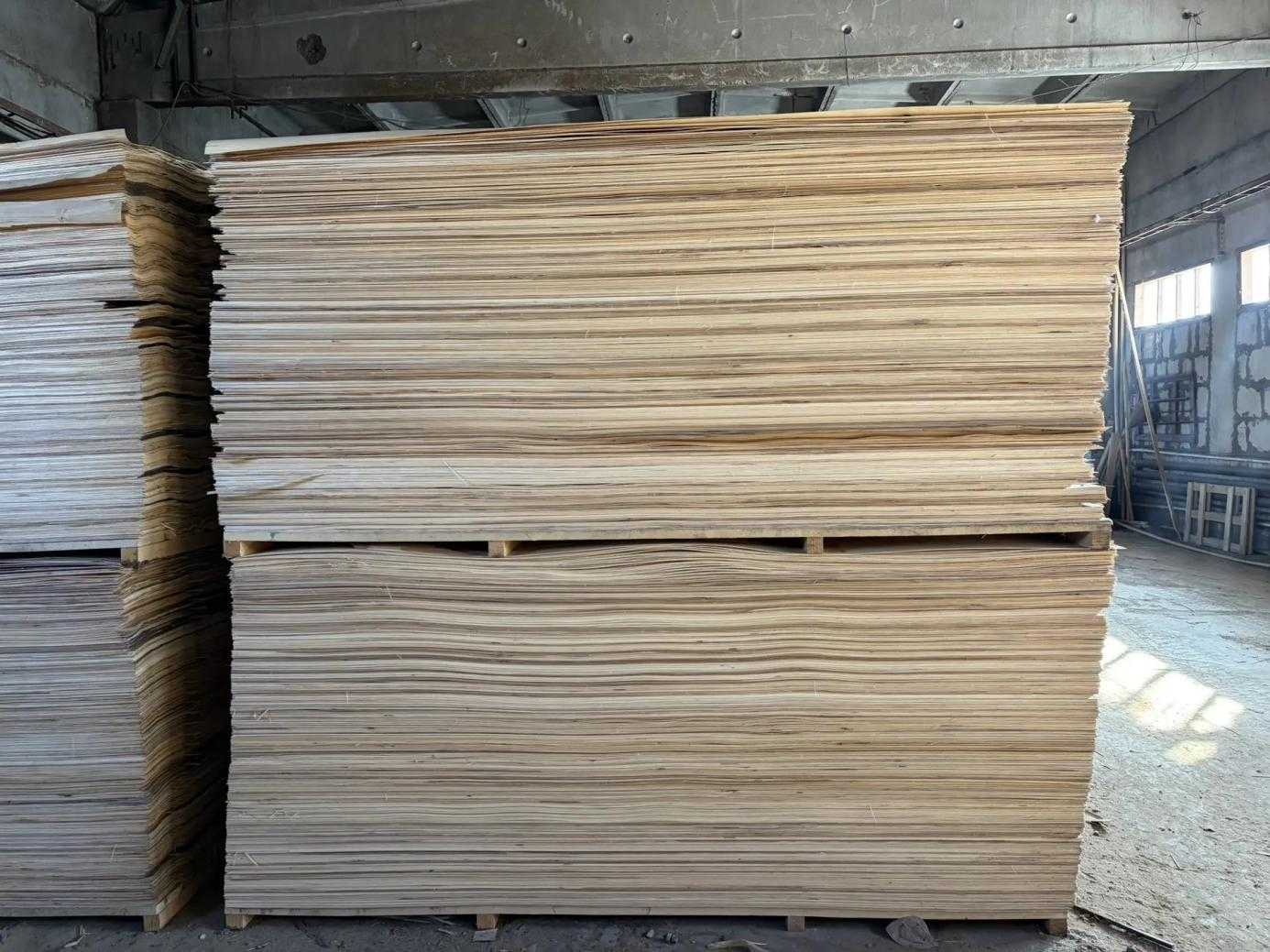
Packing and moisture
The veneer ships in strapped bundles, on bearer blocks, with moisture-barrier film. Three details matter here:
- The blocks leave a gap for forklift tines — the container is unloaded without moving sheets by hand.
- Moisture is measured before shipment and the value goes onto the shipping document. Picking up moisture is the main risk of a sea passage; veneer arriving above 12% blisters in the press.
- Bundle integrity is checked at unloading. If you find cut strapping or torn film, photograph it — damage is not registered after the fact.
How an order runs
- Send us your press platen size, target thickness and monthly requirement in m³.
- Receive a CIF price and transit time for your delivery point.
- Sample pack — before the first shipment, to verify grade and moisture.
- Contract, payment channel, shipment schedule.
- Loading photographs, shipping documents, bill of lading.