First, let us clear up a word
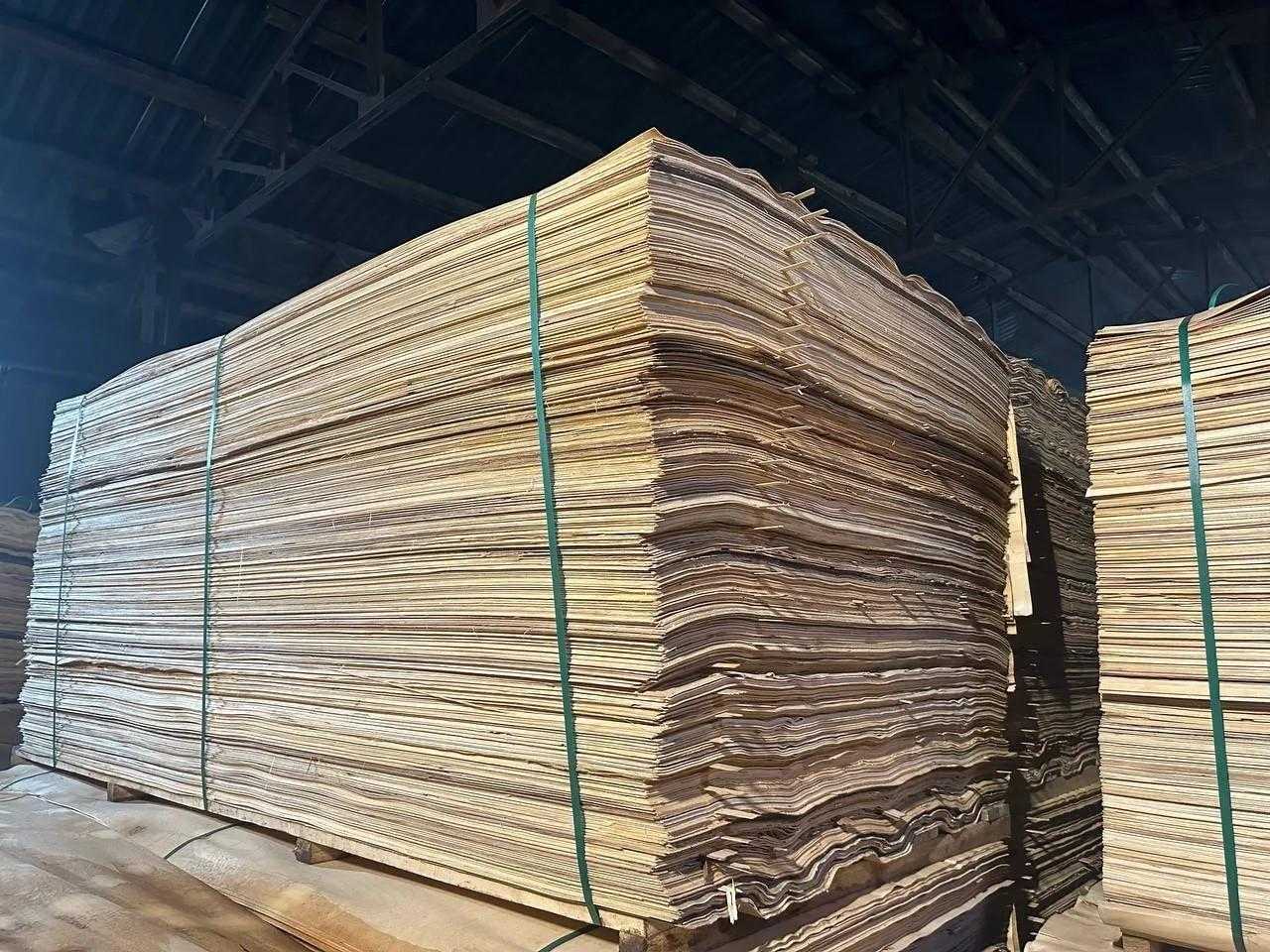
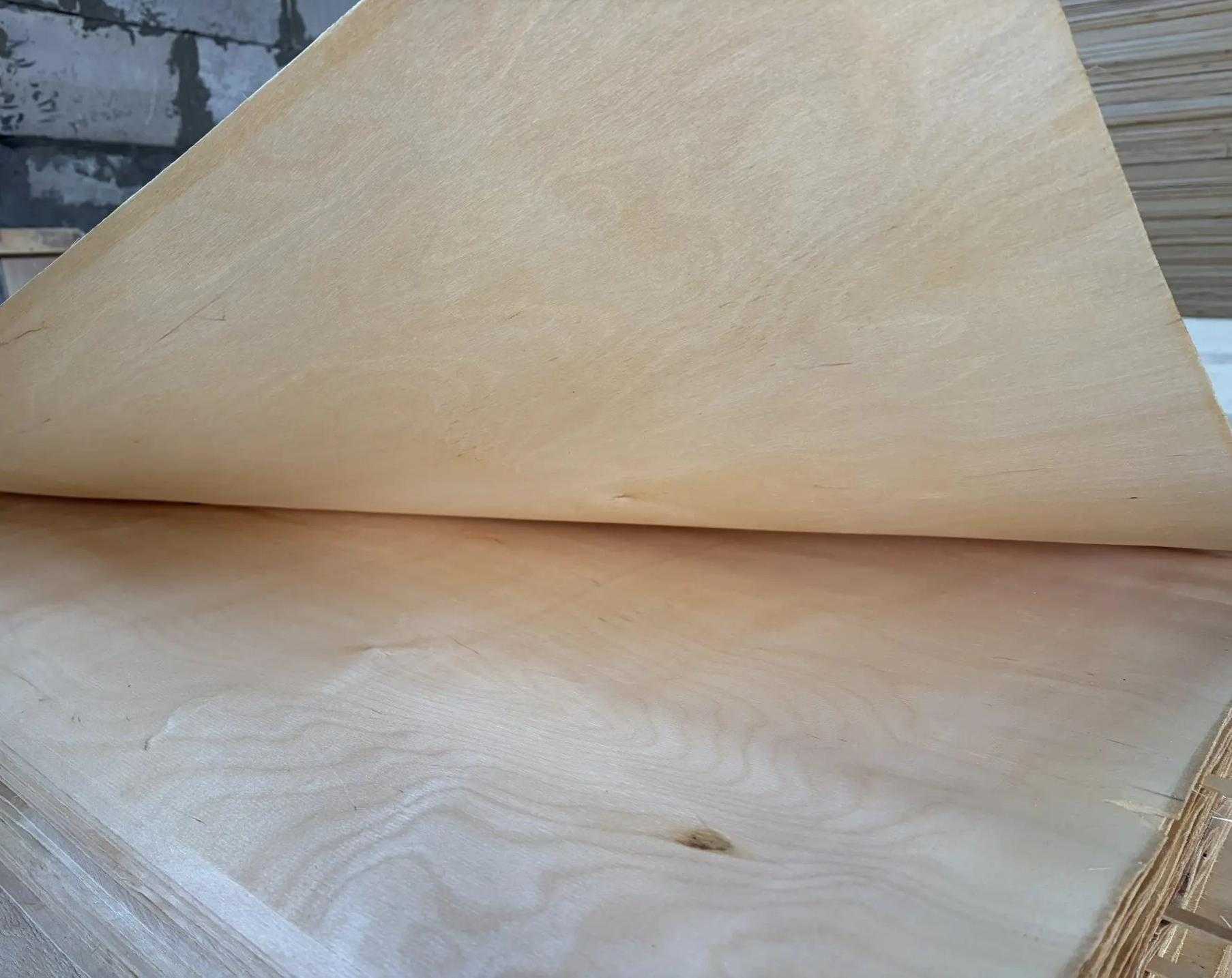
“Veneer” — like the Turkish ahşap kaplama — drags three different products behind it, and that is why buyers regularly land in the wrong place:
| Term | What it is | Who buys it |
|---|---|---|
| Rotary-cut veneer (papel) | Peeled off the log by rotation, as on a lathe. Industrial material, 0.9–1.7 mm | Plywood, LVL, packaging and match producers |
| Sliced veneer | A thin decorative cut of 0.5–0.6 mm, knife-cut for figure | Furniture fronts, doors, panels |
| Veneered wall panel | A finished “wood-look” decorative panel | Retail, interior studios |
This whole page is about the first line. If you are looking for the raw material that goes into a plywood press, you are in the right place. We do not make decorative sliced veneer.
The formats
Species, thickness band, moisture and grade are identical across all four items. The only variable is the size — and what that size does to the economics of a container.
| Size, mm | Type | Sheets per m³ | Into a 40’HC, m³ | Where it is used |
|---|---|---|---|---|
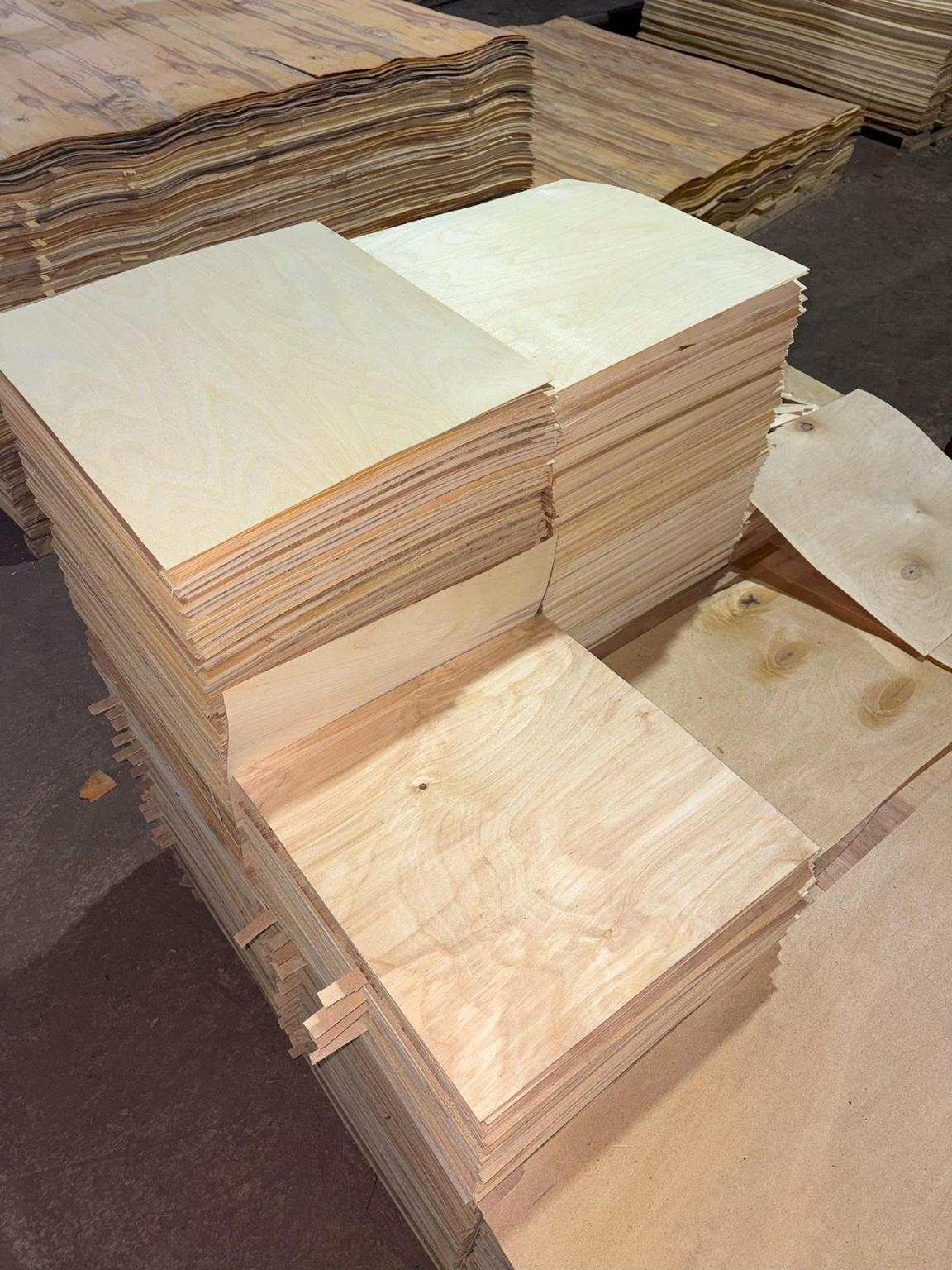
| 2600 × 1300 | Sheet | 197 | 33 | Standard plywood press. The most requested size in Turkey |
| 1600 × 1600 | Sheet | 260 | 38 | Square press, combi-panel core. Best container loading |
| 1300 × 1300 | Sheet | 394 | 40 | Small press, inner layers, packaging |
| 420 × 420 | Blank | 3,779 | 42 | Production with no cutting line, matches, small packaging |
Tolerances: ±5 mm on length and width, ±0.1 mm on thickness.
Thicknesses
Our nominal is 1.5 mm, but the band runs 0.9–1.7 mm and you set the thickness at the order stage.
| Thickness | Typical use | Surface per m³ |
|---|---|---|
| 0.9 mm | Visible face layer, thin plywood | 1,111 m² |
| 1.2 mm | Face and intermediate layers | 833 m² |
| 1.5 mm | Standard — both face and core | 667 m² |
| 1.7 mm | Inner layers, thick panel | 588 m² |
Mixed thicknesses in one order are routine: the same container can carry 1.2 mm for the face and 1.7 mm for the core. For a plant pressing multi-layer panels, that closes two needs with one shipment.
Which format suits your production
| What you produce | Format we suggest | Why |
|---|---|---|
| Standard plywood panel | 2600 × 1300 | Lies straight onto the press platen, minimum trim waste |
| Square plywood, combi panel | 1600 × 1600 | Container loading is 15% higher |
| LVL beam | 2600 × 1300 | Long format, fewer end joints along the beam |
| Packaging, crates, pallet blocks | 1300 × 1300 | Cheap unit, low appearance requirement |
| Matches, sticks, small parts | 420 × 420 | No cutting line needed, the offcut stays with us |
How to count cubic metres
Veneer is sold in m³, but you plan production in pieces or in m². The conversion is simple:
m³ = length (m) × width (m) × thickness (m) × number of sheets
Example: 2600 × 1300 mm, 1.5 mm, 5,000 sheets. 2.6 × 1.3 × 0.0015 = 0.00507 m³ per sheet → 5,000 × 0.00507 = 25.35 m³
The other way round: a 33 m³ container in the 2600 × 1300 format is 6,509 sheets, or roughly 22,000 m² of surface.
Technical summary
| Parameter | Value |
|---|---|
| Species | Birch (Betula), Udmurtia and neighbouring regions |
| Production method | Rotary cutting (peeling) |
| Thickness | 0.9–1.7 mm, nominal 1.5 mm |
| Moisture content | 5–8% |
| Density | 620–680 kg/m³ |
| Bending strength | 120–144 MPa |
| Grade | Mixed 1–4 (grade 1–2 share 22–27%) |
| GTİP (Turkish customs tariff code) / HS | 4408.90 |
| Packing | Strapped bundle, bearer blocks, moisture-barrier film |
| Minimum lot | 33 m³ (one 40’HC) |
| Railcar capacity | 102 m³ |
Current prices
Prices valid as of August 30, 2026. Prices exclude VAT, ex-works.
Price by grade — Applies to all formats
| Grade | USD/m³ · EXW | ₽/m³ · reference |
|---|---|---|
| Mixed 2–4 | $206 | 16,500 ₽ |
| Mixed 1–4 | $219 | 17,500 ₽ |
| Grade 1–2 | $438 | 35,000 ₽ |
| Grade 1 | $625 | 50,000 ₽ |
The list is kept in ₽; USD is converted at the 19 Aug 2026 rate (80 ₽/$). Contracts are in USD or EUR. · HS 4408.90 · MOQ 33 m³
Prices are ex-works the mill, excluding KDV (Turkish VAT). For the cost of delivery into Turkey, use the route table and the batch calculator on the logistics page.
Next step
If you are not sure which format will fit your press, send us the platen dimensions and your target sheet thickness — we will work out together which format gives the least trim waste and the highest container loading.