In a furniture plant, veneer is three separate inputs
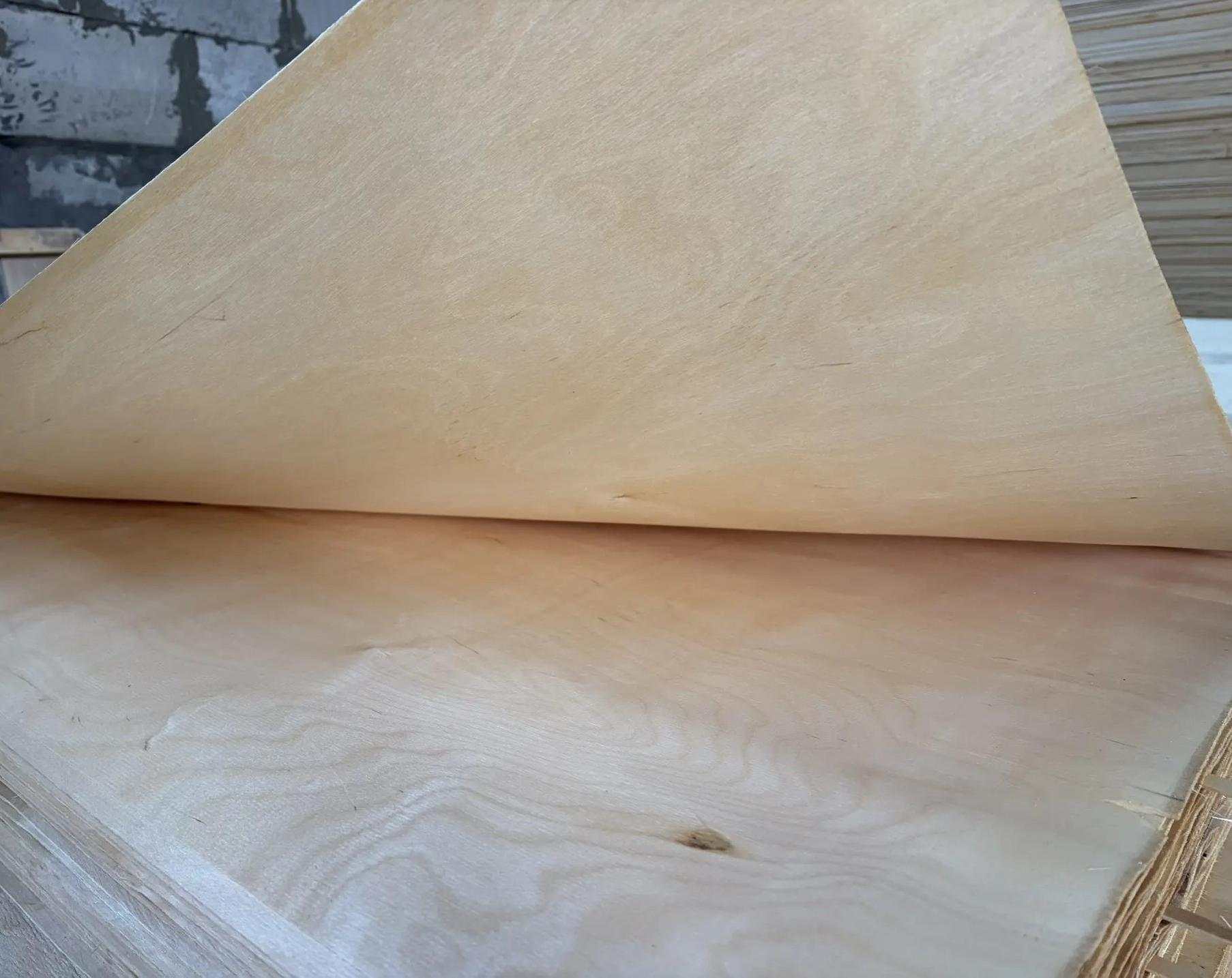
Veneer gets bought as a single line item, but inside the plant it goes to three different places, and the requirements of those three places do not match.
The visible face. Panel faces, doors, side panels — everything that ends up under paint, lacquer or foil. This needs grade 1–2: after pressing, a knot, a split or a joint all read through the surface.
The panel core and the frame. The layers nobody sees. Their job is to give thickness and carry load. Grades 3–4 go here and nothing is lost — and they cost less.
Bent-laminated parts. Seats, backrests, curved components. Here the issue is not grade but format: the mould wants a square area, and a sheet is a rectangle.
Buying without making that distinction produces one of two outcomes: you pay top-grade money for frame material, or you see defects on the face.
Which item for which job, and at what price
| Requirement | Right item | Price | Why |
|---|---|---|---|
| Visible faces, series production | Graded 1–2 | 35,000 ₽/m³ | Defect rate near zero, no sorting work |
| Faces and frames together | Mixed 1–4 sheets | 17,500 ₽/m³ | 22–27% top grade to the face, the rest to the frame |
| Frames and cores only | Mixed 1–4 sheets | 17,500 ₽/m³ | No need for top grade, the cheapest option |
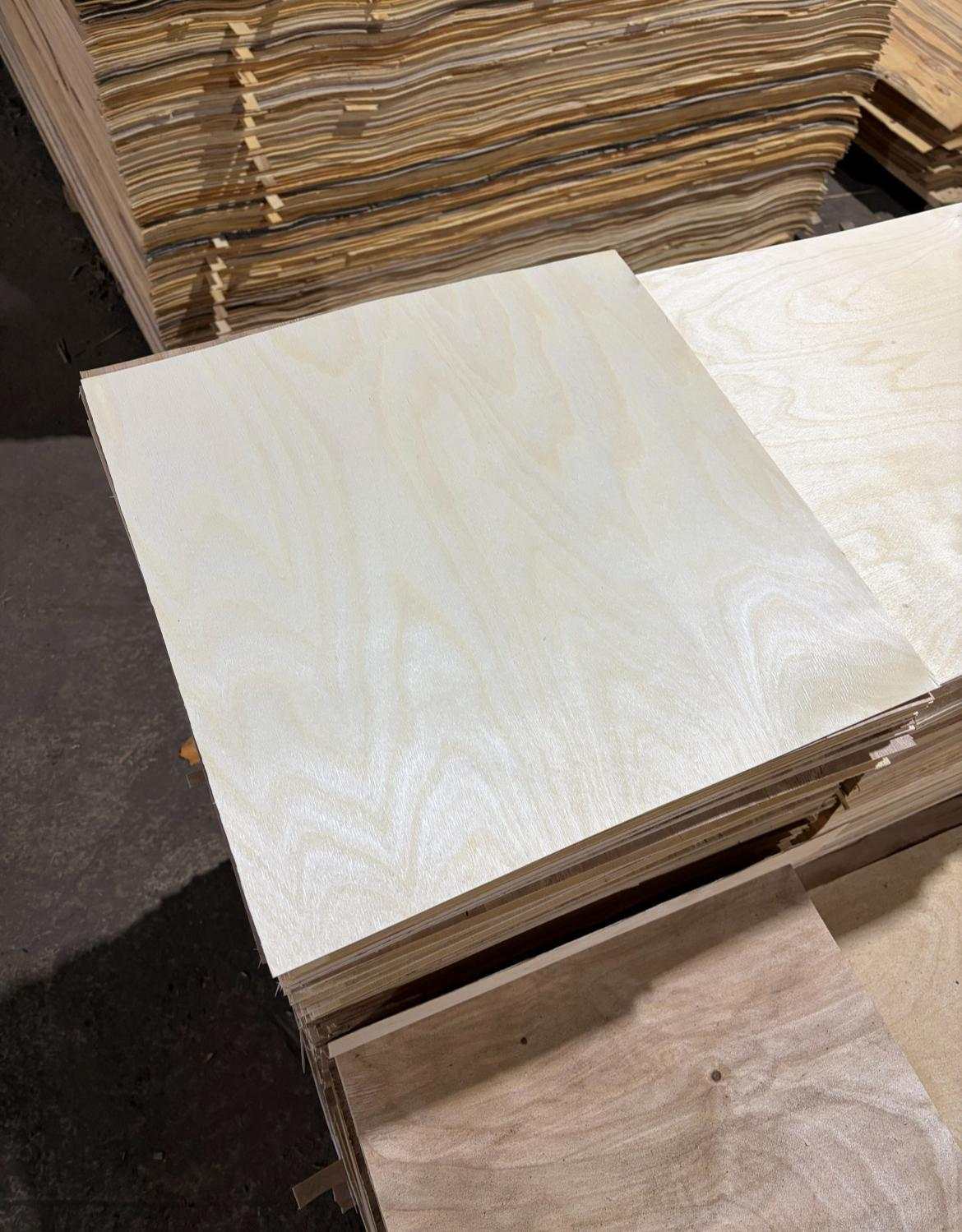
| Bent lamination, small parts | Pre-cut 420 × 420 | 29,900 ₽/m³ | Zero cutting waste at your end, 50% grade 1–2 |
| Non-standard size | Cut to size | by size | Priced from the waste ratio |
The logic of the mixed batch is clearest here. A mixed 1–4 batch yields 22–27% top grade. If you produce both faces and frames in the same plant, that 22–27% goes to the face and the remaining 73–78% to the frame — the batch is used completely and you pay the least. If you only buy faces the arithmetic changes; the full breakdown is in the table on the door panel page.
Chairs and bent lamination: format matters more than grade
Seats and backrests are mostly made by bent lamination: veneer plies are laid into a mould and pressed into a curve. Because the area the mould wants is square, cutting it out of a rectangular sheet produces waste by definition.
The 420 × 420 mm pre-cut square removes that step. One square is 0.1764 m², a cubic metre holds ≈ 3,779 pieces, so a piece costs ≈ 7.9 ₽. A 10 mm seat at 1.5 mm veneer takes roughly 7 plies — so the input cost is ≈ 55 ₽ per part.
Ply count, thickness and why moisture matters even more in a curved part are covered on the bent lamination page.
Moisture: the same physics as everywhere else
Heat cures the glue in the press, excess water in the veneer turns to steam and collects at the glue line. The result is blistering. The fault is usually looked for in the press settings when it sits in the moisture of the input.
Our band is 5–8%, measured before dispatch and written on the shipping document. The detail is on the moisture content page.
What happens after delivery is yours: indoors, off the floor, film unopened until the material goes to the press. The packaging page covers that and what to check at unloading.
Where furniture production sits in Turkey
Production clusters in a handful of centres, all of them well connected to a port — so freight is not the obstacle.
| Region | Profile | Page |
|---|---|---|
| Bursa, İnegöl | The main furniture centre, plus wood processing | Bursa, İnegöl |
| İstanbul, İkitelli | Distribution and wholesale; shortest run from Ambarlı | İstanbul |
| Düzce | Veneer and plywood region, feeding furniture | Düzce |
We supply Kayseri and Ankara Siteler on the same terms — both are large centres for series furniture and doors, and we will work out the inland leg and lead time for your address. Port distance, lead time and route options for any region are on the regional pages or available on request.
What to send us for a quote
- What you produce — panels, doors, frames, bent parts, or all of it.
- Which of it is the visible face — this decides the grade.
- Thickness and dimensions — this decides the format.
- Monthly or annual m³ — for batch planning and colour consistency.
We will work out which item is cheapest for your case and write back. If the answer is the mixed batch, we will say so.