HUŞ KAPLAMARotary-cut birch veneer from Russia

Veneer moisture content: why the 5–8% band matters

Veneer moisture content should sit at 5–8%. Anything above that band turns to steam in a hot press and shows up in the panel as blisters, delamination or a burst when the press opens. The mechanism is physical: the press runs at 110–140 °C, water in the veneer boils off and builds pressure between the plies before the glue has cured. The usual shipping band in this trade is 8–10%; we ship at 5–8%. The difference turns into money in two places — the reject rate coming off your press, and the energy you burn on your own dryer. Moisture is measured before dispatch and the figure is written into the shipping documents; you are expected to measure again on arrival.

5–8%
The band we ship at
the reading goes into the documents
8–10%
The usual trade band
arrives at the top of the band
110–140°C
Press temperature
water boils before the glue cures
12%
Pressing threshold
above it, blisters and delamination
below 3%
brittle, splits
5–8%
working band
8–10%
usual shipping band
10–12%
longer press cycle
above 12%
do not press
moisture meter
about ±1%
oven method
103 °C, reference
warehouse
below 70%

Why this page exists

Two things dominate every veneer purchase conversation: price and grade. Yet the reject panel coming off the press is usually caused by neither — it is caused by moisture, and moisture is the one parameter almost nobody asks about when comparing offers.

It is measurable and it can be written into a contract. There is no good reason not to ask.

The physical mechanism

A hot press runs at 110–140 °C. At that temperature the water inside the veneer boils. The glue has not cured yet, the steam has nowhere to go, and it builds pressure between the plies.

Moisture contentWhat happens in the press
Below 3%Veneer turns brittle and cracks during handling and lay-up. Glue is absorbed into the pores
5–8%The working band. Steam pressure stays below the rate at which the glue cures
8–10%The common shipping band in this trade. It works, but there is no margin left
10–12%Blister risk climbs fast; the press cycle has to be extended
Above 12%Blisters, internal voids, delamination; the panel can burst as the press opens

The critical point: none of these defects can be corrected after pressing. A blistered panel cannot be sanded out or repaired — it is scrap. Moisture content directly sets the output quality of your line, and the decision is irreversible.

What happens on the voyage

Inside a container it is hot by day and cold by night. The swing produces condensation, and water drips onto the cargo from the roof and the walls. Three things work against it:

  1. Moisture-barrier film. It seals the outer surface of the bundle; a bundle that arrives with torn film is the riskiest one in the batch.
  2. Dunnage battens. They lift the bundle off the floor. Direct contact with condensation pooled on the container floor is the single most common cause of damage.
  3. Strapping. A tight bundle absorbs moisture through its edges more slowly.
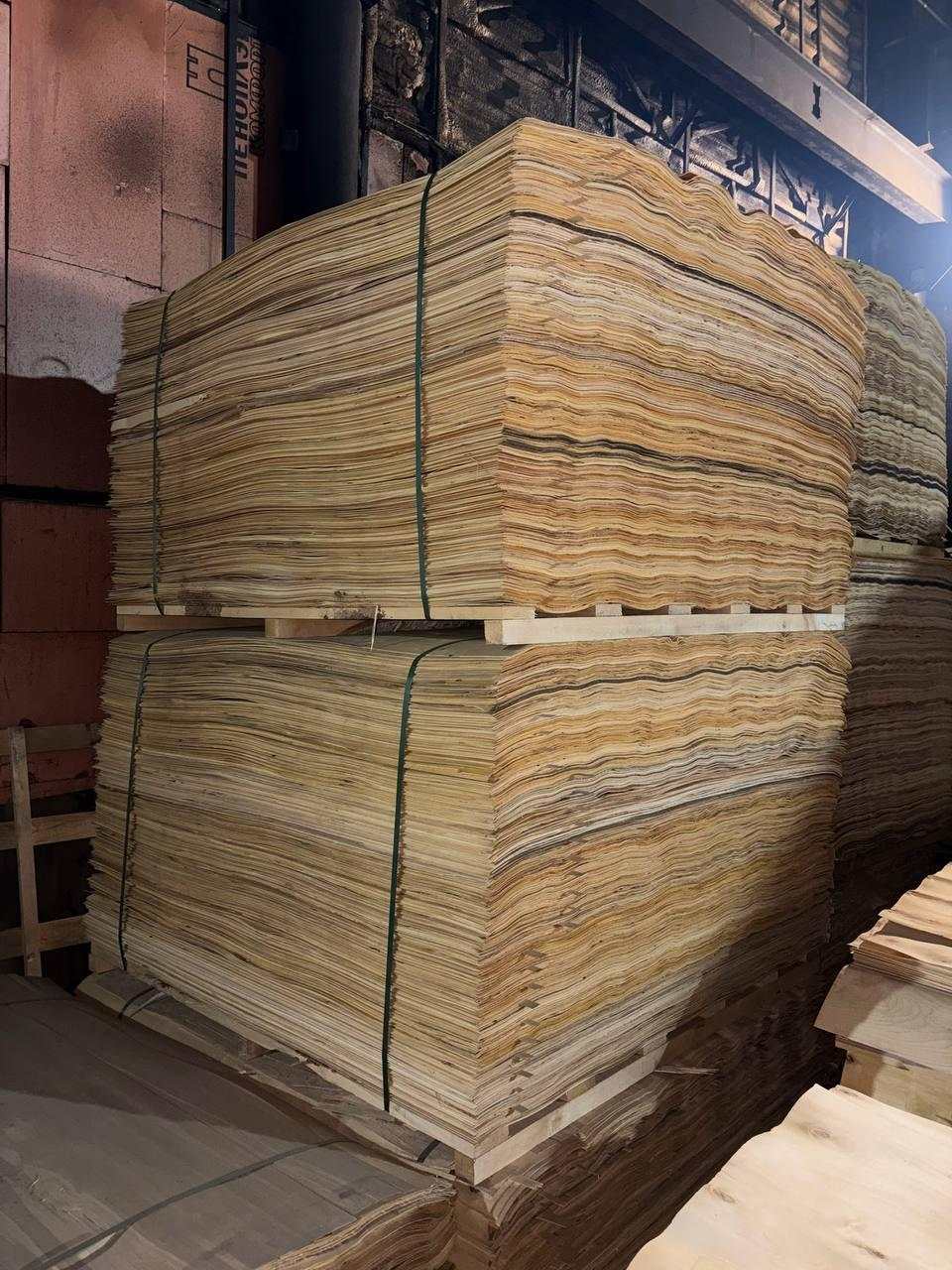
Veneer bundles being strapped and prepared for moisture protection

Measurement: two methods, one of them binding

MethodHowAccuracyWhen it is used
Moisture meter (on the floor)Pin-type or pinless instrument, in contact with the bundleAbout ±1%Quick check at unloading
Oven-drying (laboratory)Sample dried at 103 °C to constant mass, moisture calculated from the weight lossReference methodThe result that settles a dispute

Write into the contract which method is the reference one. The gap between a shop-floor reading and a laboratory reading is the source of most of the arguments that surface later.

The measuring point should be specified as well: the outer layer of a bundle and its inner layers give different figures. Standard practice is the average of several samples taken at different depths in the bundle.

What we do on our side

  • Veneer coming off the drying line is brought to the 5–8% band.
  • Moisture is measured before dispatch and the figure is written into the shipping documents.
  • Packing: strapping, dunnage battens, moisture-barrier film.
  • You are expected to measure again on arrival — the comparison against the documented figure is what any claim rests on.

Storage rules

RuleReason
Indoors and dryWood draws moisture from the air; a few days in the open is enough to do damage
Level floor, dunnage battensA bundle in contact with the floor takes up moisture from below and warps
Film intact until the moment of useAn opened bundle is exposed to the humidity of the room
Consume an opened bundle quicklyA part-used bundle puts its own remainder at risk
Monitor warehouse humidityAbove 70% for a few weeks will push the veneer out of the band

Grade is a separate subject from moisture and the two should not be confused — we set that out in detail on the grades page. Moisture content is the technical condition of the material; grade is a classification by appearance.

FAQ

Frequently asked questions

What moisture content should veneer have?

For rotary-cut veneer going into a hot press, 5–8% is the working band. Above 10% the risk of blistering climbs fast; above 12% pressing is not practically safe. Very low moisture is a problem too: below 3% the veneer turns brittle and cracks during handling and lay-up.

What does over-wet veneer do in the press?

The press runs at 110–140 °C. Water in the veneer boils, the glue has not cured yet, so the steam is trapped between the plies and builds pressure. The result is a blister, an internal void, delamination, or the panel bursting as the press opens. None of this can be corrected after pressing — the panel is scrap.

Does moisture content rise during the sea passage?

It can. Temperature swings inside the container produce condensation, and poorly packed veneer absorbs it. That is why bundles are wrapped in moisture-barrier film and set on dunnage battens — the bundle sitting directly on the container floor is always the one most at risk. Measuring on arrival is standard practice.

How is moisture content measured?

Two ways. On the floor, with a pin-type or pinless meter: fast, accurate to about ±1%. In the laboratory, by oven-drying: a sample is dried at 103 °C to constant mass and the moisture is calculated from the weight loss. In a dispute the oven result governs, so write into the contract which method is the reference one.

What should I do if moisture is high on arrival?

Do not leave the bundles sealed and wait. Stack them in a closed, ventilated, dry space; if the deviation is serious, run the material through a drying line. Record the measurement with photographs and a formal report — the comparison against the figure in the shipping documents is what any claim rests on.

How should veneer be stored?

Indoors, dry, on a level floor, on dunnage battens. The moisture-barrier film should stay intact until the moment of use, and an opened bundle should be consumed as quickly as possible. Wood draws moisture from the air: a few weeks in a warehouse at 70% relative humidity can push veneer out of the accepted band.

Why 5–8% rather than 8–10%?

Because veneer picks up moisture in transit and in the warehouse; it does not give it back. A batch shipped at 8–10% arrives pressed against the top of the band and leaves you no margin. A batch shipped at 5–8% carries enough headroom to absorb the whole gain over the voyage.

Tell us the format, thickness and monthly volume

We will work out the cubic metres per container, the freight to your port and the lead time. We answer during Turkish business hours, in Turkish, English and Russian.

Author: Andrey, Turkey representative, HUŞ KAPLAMA · Published: · Updated: