The one argument for the square: container loading
When you ship veneer, the container fills up by volume, not by weight. 33 m³ of birch veneer weighs about 21.5 t — well below the 26–28 t limit of a 40’HC. In other words, there is unused payload inside the container, and you pay for it all the same.
The square format closes that gap. Sheets of 1600 × 1600 mm sit on the container floor more efficiently, and the same box takes 38 m³.
| 2600 × 1300 | 1600 × 1600 | Difference | |
|---|---|---|---|
| Net into a 40’HC | 33 m³ | 38 m³ | +5 m³ (15%) |
| Sheets (1.5 mm) | 6,509 | 9,896 | — |
| Surface | ~22,000 m² | ~25,300 m² | +3,300 m² |
| Gross weight | ~21.5 t | ~24.7 t | +3.2 t |
| Price per m³, ex-works | 17,500 ₽ | 17,500 ₽ | the same |
| Freight per container | ~3,960 USD | ~3,960 USD | the same |
| Freight per m³ | 120 USD | 104 USD | −16 USD |
When the square is the wrong choice
To be honest about it, the format does not suit everyone. In three cases 2600 × 1300 is the better answer:
- You make the standard 1220 × 2440 mm panel. Getting to that size out of square veneer raises your trim waste, and the waste eats the freight saving.
- You produce LVL beams. The long format gives fewer overlaps along the length; on a square, the number of joints goes up.
- The short side of your press platen is under 1600 mm. In that case look at the 1300 × 1300 format.
A freight saving only means something when it is larger than the increase in waste. Send us the size of your finished panel and we will work out the waste difference for both formats together. If the numbers come out against the square, we will say so.
Technical specification
| Parameter | Value |
|---|---|
| Size | 1600 × 1600 mm (±5 mm) |
| Thickness | nominal 1.5 mm; band 0.9–1.7 mm (±0.1 mm) |
| Species | Birch (Betula) |
| Production method | Rotary cutting (peeling) |
| Moisture content | 5–8% |
| Grade | Mixed 1–4 |
| Grade 1–2 share | 22–27% |
| Density | 620–680 kg/m³ |
| Bending strength | 120–144 MPa |
| GTİP (Turkish customs tariff code) / HS | 4408.90 |
| One sheet | 0.00384 m³ · 2.56 m² |
| 1 m³ | 260 sheets · 667 m² |
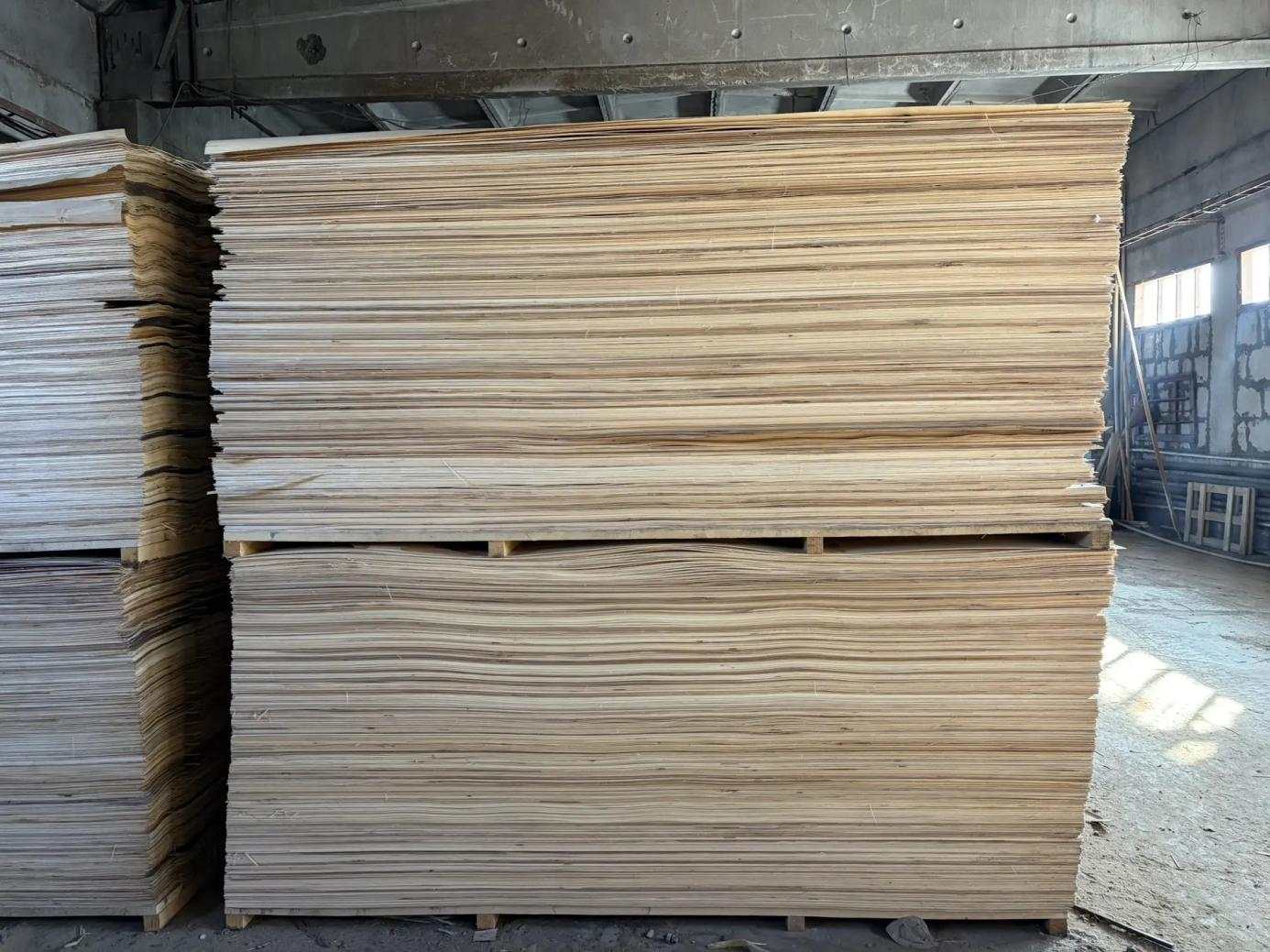
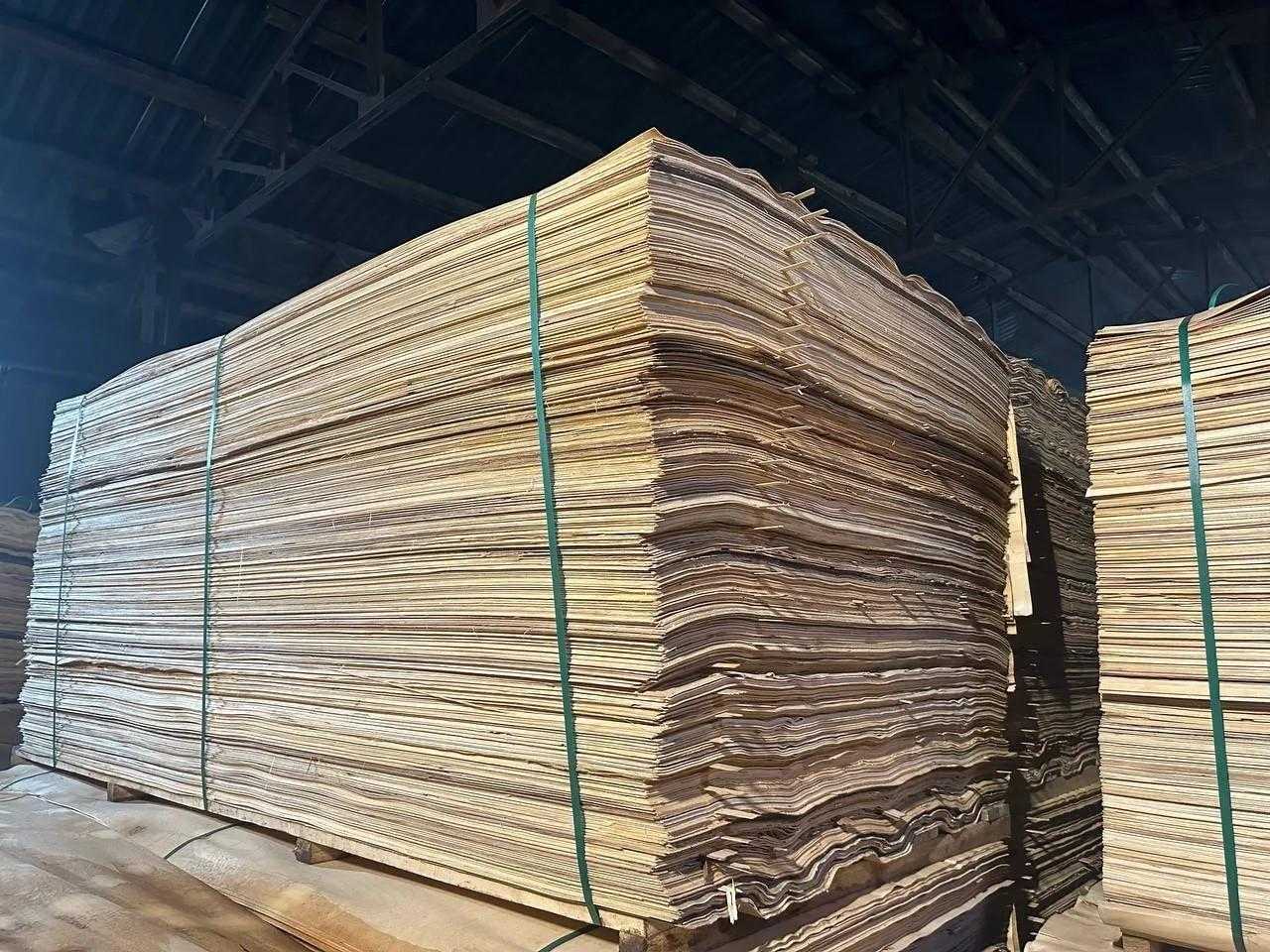
| Packing | Strapped bundle, bearer blocks, moisture-barrier film |
Sheet count by thickness
| Thickness | 1 sheet, m³ | Sheets per m³ | Sheets in a 38 m³ container |
|---|---|---|---|
| 0.9 mm | 0.00230 | 434 | 16,493 |
| 1.2 mm | 0.00307 | 326 | 12,370 |
| 1.5 mm | 0.00384 | 260 | 9,896 |
| 1.7 mm | 0.00435 | 230 | 8,732 |
Container and railcar
| Transport unit | Net m³ | Sheets (1.5 mm) | Surface | Gross weight |
|---|---|---|---|---|
| 40’HC container | 38 | 9,896 | ~25,300 m² | ~24.7 t |
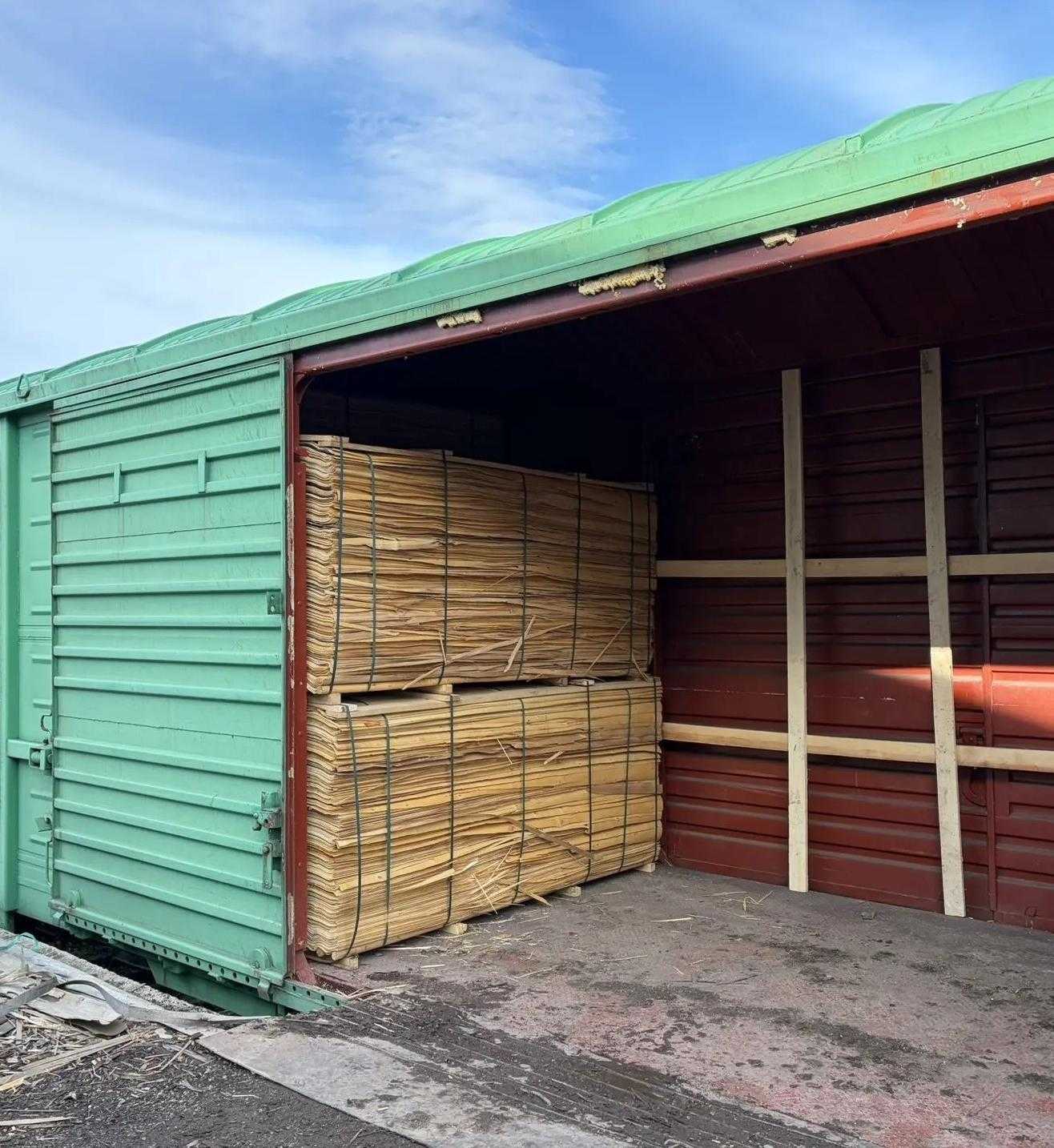
| Covered railcar | 102 | 26,562 | ~68,000 m² | ~66 t |
In a railcar the advantage of the format disappears: the car holds 102 m³ by volume anyway and fills up completely with either format. The gain from the square is specific to container shipments.
Price and total per container
| Item | Value |
|---|---|
| Goods, ex-works | 17,500 ₽/m³ ≈ 219 USD/m³ |
| Goods for 38 m³ | ≈ 8,320 USD |
| Freight per container (Novorossiysk → Ambarlı) | ≈ 2,970–3,960 USD |
| Estimated CIF total | ≈ 11,300–12,300 USD |
| CIF per m³ | ≈ 297–323 USD |
| Transit time | 22–32 days |
The calculation of Turkish taxes and the KKDF (Resource Utilisation Support Fund) levy is on the customs page; alternative routes and transit times are on the logistics page.
Next step
Send us your press platen size, the size of your finished panel and your monthly requirement in cubic metres. We will answer with a waste calculation — whether the square format genuinely wins on your production line.