Why we are the ones writing this page
A supplier writing the guide to choosing a supplier looks odd at first. But the buyer’s biggest problem in this trade is not price, it is the inability to compare: nobody publishes a price list, technical data is not standardised, and everyone says they have the best quality.
The nine questions below were written to be put to us as well. Our answers sit under each one.
The nine questions
1. Are you the producer or a trader?
The single most revealing question. A trader passes a quality problem up to the mill and you wait two links back. A producer prepares the batch himself, spots the error himself, and makes it good himself.
How to verify: ask for production photographs, a capacity figure, the measuring equipment, and a conversation with the production manager. A trader has none of these — if he did, he would be a producer.
Us: a production site in Udmurtia, our own rail siding, 102 m³ per railcar. Photographs are on the production page.
2. What is your moisture content, and do you share the measurements?
The industry standard after drying is 8–10%. Higher moisture means mould risk over a 22–32 day sea passage and unpredictable behaviour in the press.
The right question is not “is it good quality?” The right question is “do you send the measurement record with the packing list on every batch?”
Us: 5–8%, with the measurement record on every batch.
3. Will you commit the grade 1–2 share in writing?
If you are buying a mixed batch, what comes out of it determines everything. The phrase “mixed 1–4” on its own tells you nothing — 10% grade one is mixed, and so is 40%.
Us: 22–27%, written into the contract. 50% in the pre-cut blanks.
4. How many cubic metres go into a container?
A supplier who cannot answer has either never shipped a container or expects you to do the arithmetic for him.
The correct answer depends on the format: 33 m³ for 2600 × 1300 and 38 m³ for 1600 × 1600, because a 2600 mm bundle does not clear the container’s 2352 mm internal width. That 15% difference is 15% of the freight you pay.
Us: the full calculation and a calculator are on the logistics page.
5. Which delivery term is your price quoted on?
The gap between EXW, FOB and CIF is 55–305 USD per m³. If the two quotations you are comparing sit on different terms, you are not comparing anything at all.
Us: the list price is ex-works (EXW). There is a calculator for the CIF estimate.
6. How will the payment go through?
The question to ask before the price. Turkey did not join the sanctions, but Turkish banks apply strict compliance because of secondary sanctions exposure: the country is not prohibited, the bank is unwilling.
If the supplier has no working channel, the goods arrive and the money does not leave.
Us: USD or EUR through a payment agent. The first three to five shipments are 100% prepaid — and prepayment earns you the 6% KKDF, set out in detail here.
7. Which countries do you ship to — and which do you not?
The second half matters more. A supplier who tells you “we ship to the EU too, we will sort out the origin” is selling you a risk.
Birch plywood shipped from Turkey carries a 15.8% anti-dumping duty regardless of the origin declared (EU Regulation 2024/1287), and to date no Turkish company has obtained an exemption. From 30 December 2026 the EUDR requires the coordinates of the forest plot where the tree was felled.
Us: we do not ship to the EU, the United Kingdom or Japan, and we state plainly why not.
8. What happens if the batch deviates?
It has to be written into the contract: compensation or refund, within what period, measured against what. A verbal assurance means nothing in this trade.
Us: the actual batch is compared against the figures on the packing list; if the deviation is ours, we compensate on the next batch or refund the difference.
9. Are samples charged, and will the batch match the sample?
A charge for samples is not a bad sign. The absence of that batch’s measurement record alongside the sample is a bad sign.
Us: free of charge, five to ten sheets of each format, courier at our cost, 7–10 days, with the measurement record.
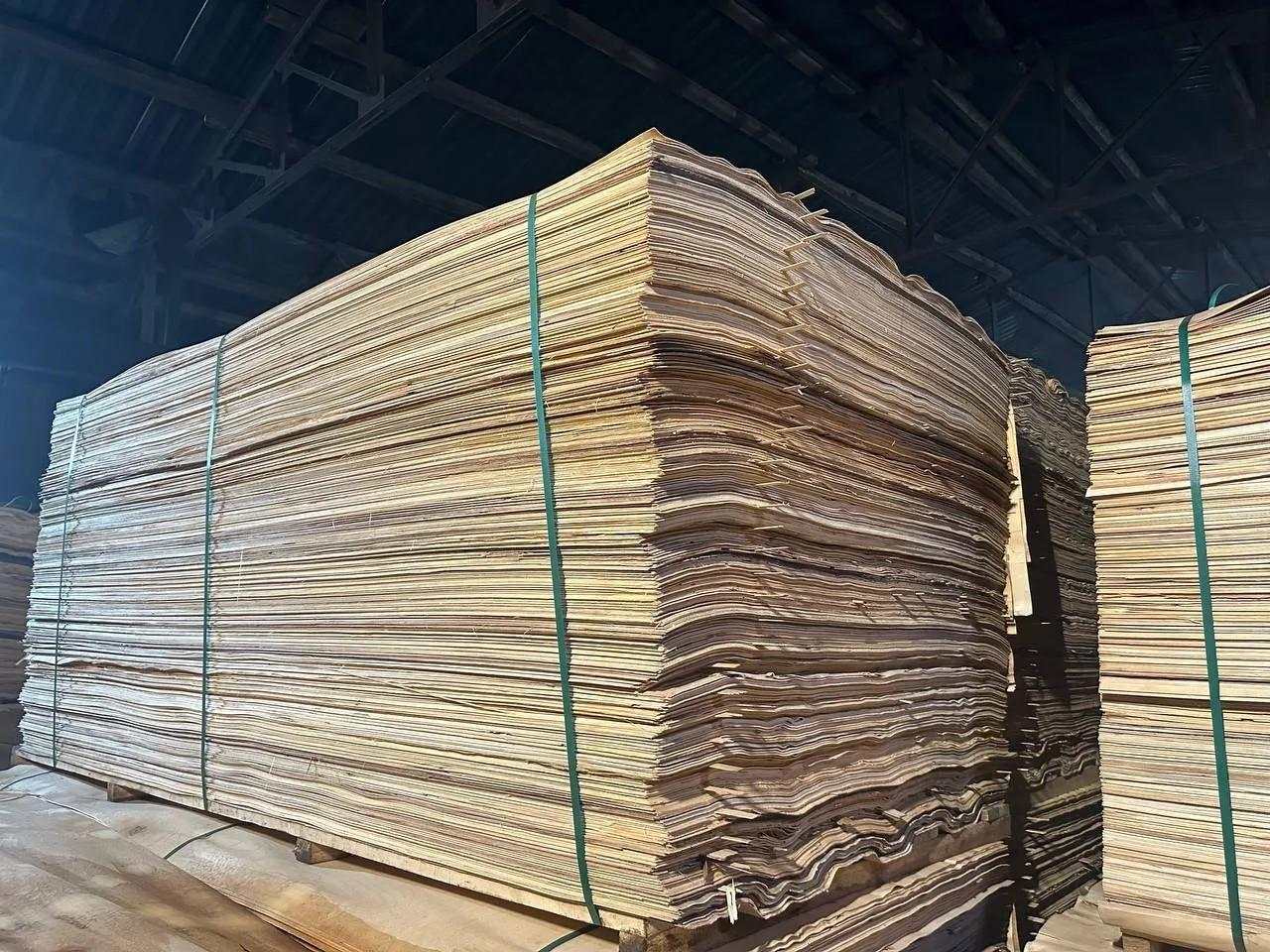
Four red flags
How many suppliers to work with
At least two on regular volume. A single supplier weakens you in a price negotiation, and one disruption stops your production.
More than three cannot be managed, though: every supplier means a separate quality band, a separate payment channel and a separate document flow. Two good suppliers beat five mediocre ones.
We are willing to be the second supplier — nobody replaces their main supplier on the first shipment, and we do not expect it.
Put these nine questions to us
We have written the answers above, but a written answer and a live one are different things. Call or write on WhatsApp, ask the same questions, and compare what you get against what other suppliers tell you.
Being able to compare suits us too: as long as we are the only supplier publishing an open price list, the comparison comes out in our favour.